
The Uttar Pradesh Education Service Selection Commission (UPESSC) has officially opened the registration portal for the UP TET 2026, introducing a mandatory One-Time Registration (OTR) system for all candidates. Aspiring teachers must complete their applications by April 26, 2026, to qualify for the eligibility examinations scheduled to take place in early July across the state.
UP TET 2026
| Feature | Details |
| Exam Authority | Uttar Pradesh Education Service Selection Commission (UPESSC) |
| Mandatory Requirement | One-Time Registration (OTR) with Aadhaar Linking |
| Application Window | March 27 – April 26, 2026 |
| Exam Dates | July 2, 3, and 4, 2026 |
| Validity of Certificate | Lifetime (as per NCTE guidelines) |
| Selection Criteria | Minimum 60% for General; 55% for Reserved Categories |
UP TET 2026 Notification: A Strategic Overhaul of Teacher Recruitment
The UP TET 2026 notification, released on March 20, 2026, represents a significant policy shift by the Uttar Pradesh government. Under the direction of the newly unified UPESSC, the examination process has been redesigned to align with the National Education Policy (NEP) 2020. This year’s cycle is expected to attract over 2.5 million applicants, making it one of the largest state-level eligibility tests in India.
The implementation of the One-Time Registration (OTR) system is the cornerstone of this overhaul. By centralizing candidate data, the state aims to eliminate the “solver gang” phenomenon—coordinated efforts by third parties to impersonate candidates. “Our goal is a ‘zero-error’ examination,” stated Dr. S.K. Pandey, a senior official at the UPESSC. “The OTR ensures that the person who registers is the same person who sits in the exam hall and eventually joins the classroom.”
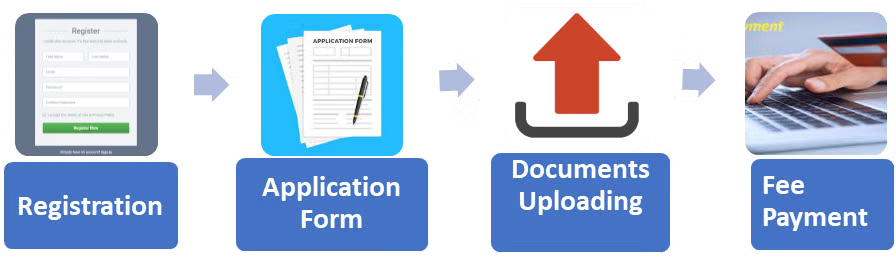
The Anatomy of the New OTR System
The OTR is not merely a registration step; it is a permanent digital identity for educators in Uttar Pradesh. Candidates are required to provide a comprehensive set of data points, which are then cross-referenced with national databases.
The Verification Loop
- Biometric Synchronization: The OTR portal is linked to the Unique Identification Authority of India (UIDAI). Candidates must perform an OTP-based or biometric authentication.
- Document DigiLocker Integration: To ensure the authenticity of mark sheets, the UPESSC has integrated with DigiLocker. Candidates can pull their 10th, 12th, and Degree certificates directly from the cloud, reducing the risk of forged documents.
- Permanent ID Generation: Once the data is verified, a unique OTR ID is generated. This ID will be required for all future teacher recruitment exams (Super TET) and administrative promotions within the state education department.
Extended Examination Schedule and Logistics
Due to the massive volume of applicants, the UP TET 2026 will be conducted over three days rather than a single day. This “staggered shift” approach is designed to manage the traffic flow in major hubs like Prayagraj, Lucknow, Varanasi, and Meerut.
Critical Deadlines
- Registration Launch: March 27, 2026 (10:00 AM IST)
- Final Submission Deadline: April 26, 2026 (11:59 PM IST)
- Correction Window: April 28 – May 01, 2026. Note: Only minor details can be edited; OTR-verified fields remain locked.
- Admit Card Issuance: June 30, 2026.
The Commission has designated over 3,000 centers across 75 districts. For the first time, all centers will be equipped with high-frequency jammers to prevent the use of Bluetooth devices and other electronic aids.
Eligibility Standards: Raising the Bar
The eligibility criteria for UP TET 2026 have been strictly defined to ensure pedagogical quality. The Commission has clarified that the “Final Year Appearing” rule still applies, allowing students in the last semester of their teacher training courses to apply, provided they produce their results during the document verification phase.
Paper I (Primary: Classes 1 to 5)
Candidates must have completed their Senior Secondary education with at least 50% marks and possess a 2-year Diploma in Elementary Education (D.El.Ed/BTC). Alternatively, those with a 4-year Bachelor of Elementary Education (B.El.Ed) are also eligible.
Paper II (Upper Primary: Classes 6 to 8)
A Graduation degree with at least 50% marks and a Bachelor of Education (B.Ed) is the standard requirement. In accordance with recent judicial clarifications, the Commission has specified that B.Ed holders are primarily eligible for Paper II, while D.El.Ed holders remain the primary candidates for Paper I, though they may apply for both if they hold a degree.
In-Depth Syllabus Analysis and Exam Pattern
The UP TET 2026 follows a multiple-choice question (MCQ) format. Each paper consists of 150 questions to be completed in 150 minutes.
Subject Weightage Breakdown
- Child Development and Pedagogy (CDP): 30 Questions. The 2026 syllabus places a 40% higher weightage on “Inclusive Education” and “Understanding Children with Special Needs.”
- Language I (Hindi): 30 Questions. Focused on grammar, proficiency, and pedagogical development.
- Language II (English/Urdu/Sanskrit): 30 Questions. Candidates must choose one during registration.
- Mathematics/Environmental Studies (Paper I): 30 Questions each.
- Subject Specific (Paper II): 60 Questions. Candidates choose either Science & Mathematics or Social Studies based on their academic background.
The difficulty level of Paper II is mapped to the “Senior Secondary” level (Class 12) of the UP Board, while Paper I aligns with the “Secondary” level (Class 10).
Anti-Leak Technology and Security Protocols
Following past controversies regarding paper leaks in regional competitive exams, the UP government has introduced “Project Kavach” for UP TET 2026.
- GPS-Tracked Logistics: The trunks containing the OMR sheets and question papers will be fitted with GPS trackers and digital locks that only open at a specific time and geo-location.
- CCTV Live Feed: Every examination hall will be under 24/7 CCTV surveillance, with a live feed transmitted to a “Command and Control Centre” in Lucknow.
- Unique QR Codes: Each question paper will feature a hidden QR code unique to the candidate. If a photo of the paper is taken and uploaded online, the system can instantly trace the source to the specific center and seat number.
Comparative Analysis: UP TET vs. CTET
Many candidates often ask whether they should prioritize the Central Teacher Eligibility Test (CTET) or the state-specific UP TET 2026. While both certificates are now valid for a lifetime, there are distinct advantages to the UP TET for those seeking employment within the state.
- Regional Language Focus: UP TET offers Urdu and Sanskrit options that are deeply aligned with the UP state curriculum.
- Weightage in Super TET: While CTET is qualifying, the marks obtained in UP TET are often given preferential consideration or “weightage” during the final merit list preparation for Uttar Pradesh Assistant Teacher vacancies.
- Content Specificity: UP TET questions often lean more toward factual knowledge and state-specific geography and history in the EVS section, whereas CTET is more pedagogy-heavy.
Expert Recommendations for Candidates
Ananya Verma, a senior educator at a leading coaching institute in Prayagraj, advises candidates to start with the OTR immediately. “Do not wait for the final week of April. The server load during the last 48 hours of UP TET 2026 registration is historically high. Ensure your photographs meet the 20kb–50kb specification, or the system will reject the upload.”
Furthermore, experts suggest focusing on the “Social Science” or “Science” sections of Paper II early on, as these 60 marks often act as the tie-breaker for the merit list.
Conclusion: A Gateway to 100,000 Vacancies
The UP TET 2026 is more than just an eligibility test; it is the prerequisite for the upcoming “Maha Bharti” (Mega Recruitment) expected in late 2026. Sources within the Basic Education Department suggest that nearly 1,00,000 assistant teacher posts are currently vacant across rural and urban cadres. By clearing the UP TET now, candidates position themselves at the forefront of this massive employment drive.
Aspiring teachers are encouraged to maintain a disciplined study schedule, focusing on the revised pedagogical trends and the new OTR-centric application process to ensure their participation in this landmark examination.