
If you’ve ever used a payment app to sell something online, collect freelance payments, or run a small side hustle, you should pay close attention right now. A major reporting change is coming, and it could affect millions of ordinary users, not just registered businesses. The IRS new tax rule for PayPal, Venmo & Cash App users is set to change how digital payments show up on tax returns. Many people still believe small app transfers go unnoticed, but under the IRS new tax rule for PayPal, Venmo & Cash App users, certain transactions will now be automatically documented and reported to the IRS. The reason this news feels shocking is the sudden drop in the reporting threshold. In the past, only large online sellers or high-volume businesses received tax paperwork from payment platforms. Now even casual sellers and part-time freelancers could receive one. If you resell used items, tutor students, design graphics, or earn occasional gig income, this rule directly affects you even if you only earned a few hundred dollars all year.
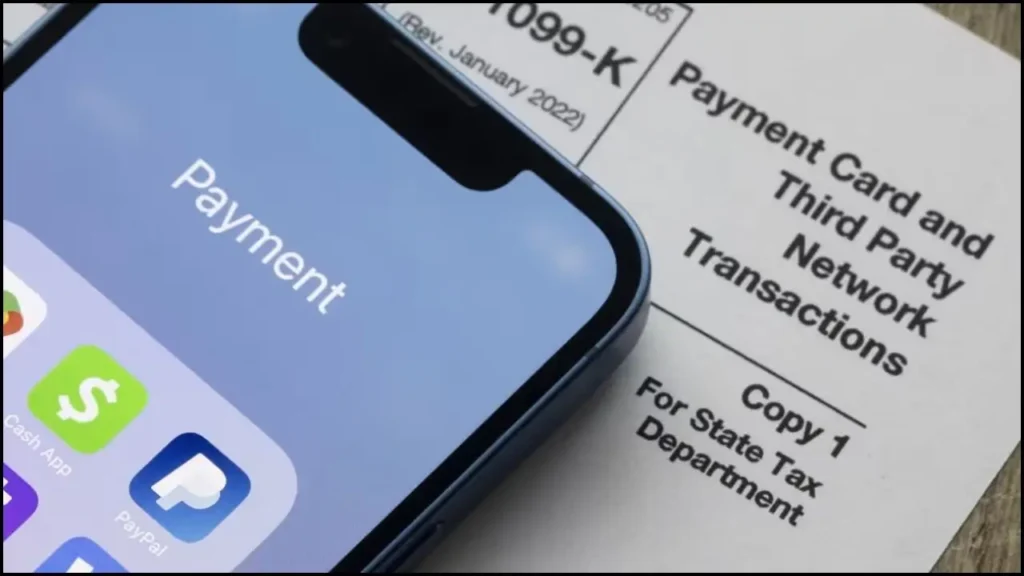
The IRS new tax rule for PayPal, Venmo & Cash App users does not create a new tax. You are not being charged simply for using payment apps. Instead, the government is expanding reporting requirements so it can track income more accurately. Payment platforms must now send users Form 1099-K when business payments exceed $600 in a year, and the IRS receives the same form. This means responsibility shifts to taxpayers to report profits properly, separate personal transfers from business payments, and keep records. For freelancers, resellers, and gig workers, the IRS new tax rule for PayPal, Venmo & Cash App users effectively turns payment apps into documented income channels.
IRS Drops Shocking New Tax Rule
| Key Information | Details |
|---|---|
| Tax Form Issued | Form 1099-K |
| Reporting Threshold | $600 in annual business payments |
| Platforms Affected | PayPal, Venmo, Cash App, Stripe and similar services |
| Effective Filing Season | 2026 tax filing for 2025 income |
| Who Receives It | Freelancers, online sellers, side hustlers, gig workers |
| Personal Transfers | Not taxable if categorized correctly |
| Main Risk | IRS notices due to incorrect reporting |
The biggest takeaway is this. Digital payments are no longer invisible. The government is not taxing your dinner split or birthday gift, but it is monitoring business income much more closely than before. For honest taxpayers, the change mainly requires organization. Keep receipts, track earnings, and understand how profits work. The confusion surrounding the IRS new tax rule for PayPal, Venmo & Cash App users comes from misunderstanding the paperwork, not from new taxes. Most people will not owe more money. They simply need to report income correctly. If you prepare early, tax season in 2026 will be routine. If you ignore it, you could face unnecessary notices and stress.
What Exactly Changed
- Previously, payment processors only issued a 1099-K if a user exceeded $20,000 in payments and 200 transactions in a single year. That threshold excluded most people who casually sold items or did occasional freelance work.
- Under the IRS new tax rule for PayPal, Venmo & Cash App users, the threshold drops to just $600 total payments. One or two transactions alone could now trigger a tax form. Someone cleaning out a closet, selling a used phone, or designing a logo for a client might receive official IRS paperwork for the first time.
- The real change is not taxation but visibility. The IRS can now match what you report on your tax return with payment platform data automatically.
Understanding Form 1099-K
Here is where confusion usually begins.
- A 1099-K does not show your profit. It shows the total amount of money processed through the payment app. The form does not subtract platform fees, shipping costs, refunds, or what you originally paid for an item.
- Imagine selling a used laptop for $900 that originally cost you $1,200. The form still reports $900. Under the IRS new tax rule for PayPal, Venmo & Cash App users, you must report the transaction and document your original cost to show you made no profit.
- That is why record keeping is becoming extremely important. Without documentation, the IRS assumes the full amount could be taxable income.
Which Transactions Are Taxable And Which Are Not
This is the biggest question people have.
Non-Taxable Transfers
You usually do not owe taxes on personal payments such as splitting dinner, shared rent, reimbursing a friend, receiving a family gift, or paying someone back for groceries.
Taxable Income
- You may owe taxes if payments are for freelance services, selling products online, providing digital services, gig economy earnings, or any activity intended to make a profit.
- The IRS looks at intent. If the payment was for earning money, it qualifies as income under the IRS new tax rule for PayPal, Venmo & Cash App users.
Why The IRS Is Doing This
The gig economy has grown rapidly. Millions of people now earn income outside traditional employment. Mobile payment apps made it incredibly easy to receive money but also made it difficult for tax authorities to track earnings. The IRS estimates a large amount of taxable income goes unreported each year simply because it is not documented. The new reporting rule is meant to close that gap. Payment platforms are essentially becoming financial reporting intermediaries under the IRS new tax rule for PayPal, Venmo & Cash App users.
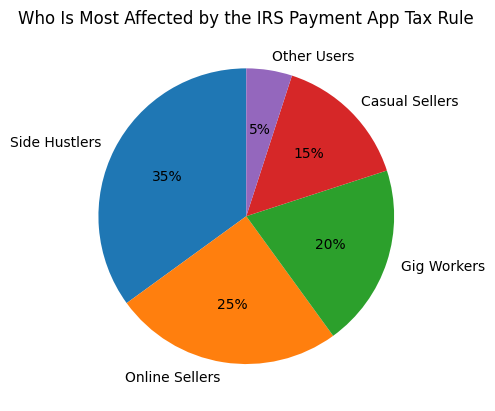
Who Will Be Most Affected
Side Hustlers
Freelancers, tutors, consultants, photographers, and designers will likely receive 1099-K forms.
Online Sellers
People selling on marketplace platforms or social media stores are strongly impacted by the IRS new tax rule for PayPal, Venmo & Cash App users.
Gig Workers
Delivery drivers and independent contractors already report income, but verification now becomes automatic.
Casual Sellers
Even people selling household items may receive a form, although they might still owe no taxes if there was no profit.
Common Misconceptions
Many people misunderstand the change.
- Some think personal transfers will be taxed. They will not. Only business income matters.
- Others believe receiving a 1099-K automatically means they owe money. That is not true. Taxes apply only to profit, not total payments.
- Another myth is that small payments will not matter. They will, because the IRS receives the same documentation under the IRS new tax rule for PayPal, Venmo & Cash App users.
How To Prepare Before 2026
- First, separate business and personal payments. Using one account for everything causes reporting confusion.
- Second, keep receipts and purchase records. You need proof of original costs to calculate profit.
- Third, track expenses such as supplies, shipping, and transaction fees. These deductions reduce taxable income.
- Fourth, label transactions properly inside payment apps. Correct tagging helps avoid IRS misunderstandings under the IRS new tax rule for PayPal, Venmo & Cash App users.
What Happens If You Ignore It
If your tax return does not match the 1099-K form, the IRS system flags it automatically. You may receive a CP2000 notice suggesting additional taxes owed. You can dispute it, but you must provide records. Without documentation, the IRS may treat the full amount as taxable income. The stress, paperwork, and delays can last months. Understanding the IRS new tax rule for PayPal, Venmo & Cash App users early prevent that situation.
Practical Example
- Consider a simple scenario. You sell used electronics for $2,000 through a payment app. You originally paid $2,200 for them.
- You receive a 1099-K reporting $2,000.
- You actually made no profit, so you owe no tax. But you still must report the sale and document the original purchase price. Without proof, the IRS assumes $2,000 is income.
Read More:-
FAQs on IRS Drops Shocking New Tax Rule
Will I be taxed for sending money to friends or family
No. Personal transfers and reimbursements are not taxable when categorized correctly.
Why did I receive a 1099-K even without profit
The form reports payments received, not profit. You must report expenses to calculate the taxable amount.
Do I have to report income under $600
Yes. All income is taxable by law. The $600 threshold only determines when platforms must send a form.
Which year does the rule apply to
It applies to income earned in 2025 and reported during the 2026 tax filing season.