
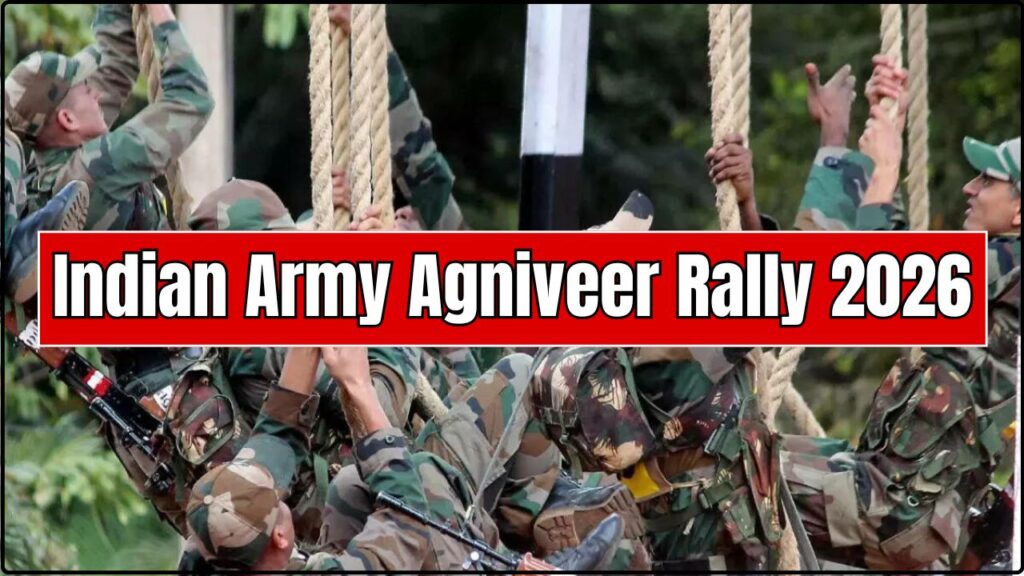
The Indian Army Agniveer Rally 2026 Online Form Released notification has opened applications for thousands of young candidates nationwide, with registration starting 13 February and closing on 1 April 2026. The recruitment is conducted under the Government of India’s Agnipath military service programme and requires applicants to pass a written examination, physical tests and medical screening before final selection.
Indian Army Agniveer Rally 2026
| Item | Details |
|---|---|
| Scheme | Agnipath Military Recruitment Programme |
| Application Period | 13 Feb – 1 April 2026 |
| Age Limit | 17.5 to 21 years |
| Vacancies | ~25,000 (approx.) |
| Service Duration | 4 years |
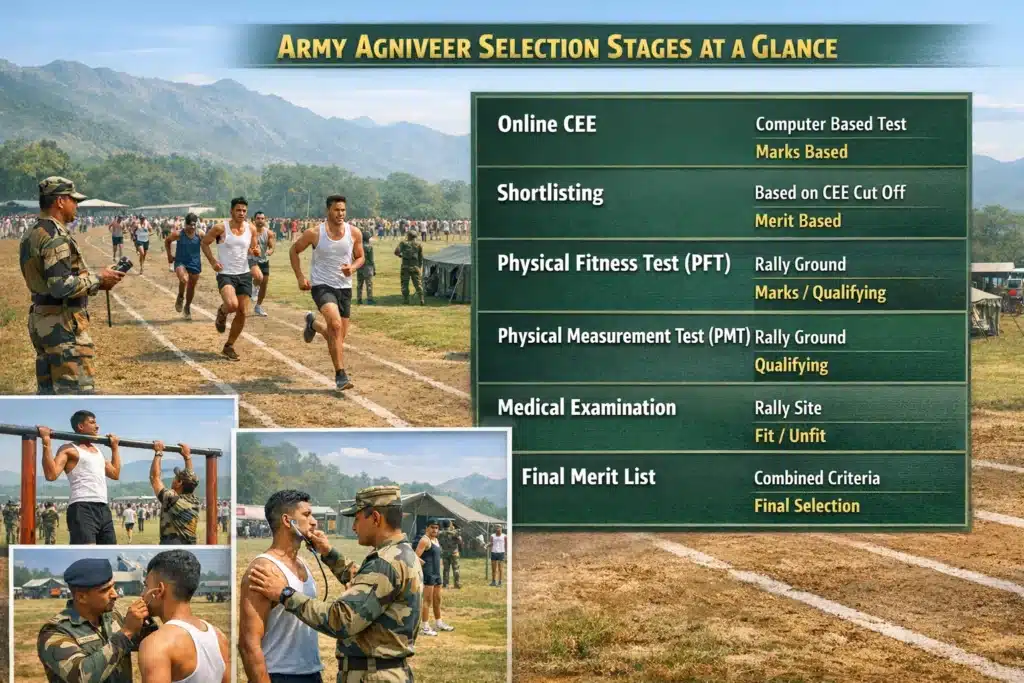
| Selection Stages | Online exam → Rally → Medical → Merit list |
| Salary (Starting) | Approx. ₹30,000/month |
| Retention | About 25% absorbed into regular Army |
| Post-Service Benefit | Seva Nidhi financial package |
The Indian Army Agniveer Rally 2026 Online Form Released announcement begins a major nationwide recruitment exercise offering youth an opportunity to serve in the armed forces. With a structured selection process, financial benefits and post-service opportunities, authorities encourage eligible candidates to apply early and prepare carefully for both academic and physical stages of the recruitment.
What the Recruitment Drive Represents
The recruitment campaign is part of the Government of India’s Agnipath Scheme, introduced in 2022 to reshape military manpower policy. The scheme recruits youth for four years as “Agniveers,” with only a portion retained in permanent service.
Officials say the objective is to create a younger armed force. The Indian Army’s average soldier age previously exceeded 32 years. Defence planners aim to bring it closer to 26 years.
A senior Army recruiting officer said in an official briefing:
“The system ensures merit-based selection through written examination first. Candidates should apply independently and avoid agents.”
Policy analysts state the reform also reduces long-term pension obligations while creating trained personnel who can enter civilian sectors such as security, emergency services and technical industries.
Application Process
Candidates must apply only through the official recruitment portal. They are required to:
- Register using Aadhaar and personal details
- Upload educational certificates
- Upload photograph and signature
- Select recruiting office region
- Pay the examination fee
- Download the admit card
The Army now requires a written exam before any rally participation, a shift from earlier open recruitment grounds.
Recruitment officials say the change was made after large gatherings in previous rallies created administrative and safety challenges.
Eligibility Requirements
Age Criteria
Applicants must be between 17 years 6 months and 21 years.
Education Requirements
| Category | Qualification |
|---|---|
| Agniveer General Duty | Class 10 pass |
| Agniveer Technical | Class 12 with Physics & Mathematics |
| Clerk/Store Keeper | Class 12 with English and Mathematics |
| Tradesman | Class 8 or 10 pass |
| Nursing Assistant | Science background required |
Officials note that clerk posts are competitive because they involve documentation and computer work.
Selection Process Explained
Stage 1 — Online Entrance Examination
The computer-based test assesses:
- Mathematics
- General knowledge
- Science
- Reasoning
The exam duration and difficulty vary depending on the applied category.
Stage 2 — Physical Fitness Rally
Shortlisted candidates attend an Army recruitment ground.
Tests include:
- 1.6 km run
- Pull-ups
- Zig-zag balance
- 9-foot ditch jump
Stage 3 — Medical Examination
Army medical officers evaluate:
- Vision standards
- Hearing ability
- Dental health
- Body mass index
- Physical deformities
Stage 4 — Final Merit List
The merit list is prepared based on written exam performance and physical fitness scores.
Salary and Financial Benefits
The government provides a structured compensation system.
| Year | Monthly Package |
|---|---|
| 1st Year | ₹30,000 approx. |
| 2nd Year | ₹33,000 approx. |
| 3rd Year | ₹36,500 approx. |
| 4th Year | ₹40,000 approx. |
A portion is contributed to the Seva Nidhi Fund, matched by the government.
At completion, candidates receive a tax-free lump sum of roughly ₹11–12 lakh.
Defence economists say the payment acts as transition capital for education or business.
Life During Training
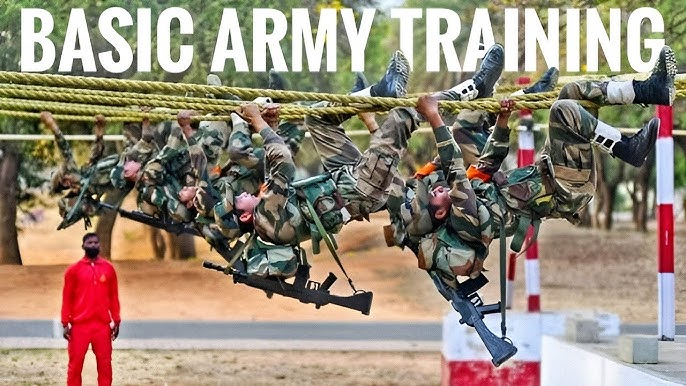
Selected candidates undergo about 24–31 weeks of basic military training.
Training includes:
- Weapons handling
- Field craft
- Physical endurance
- First aid
- Disaster relief operations
- Military discipline
After training, recruits are posted to operational units across the country.
Army instructors say many recruits experience their first exposure to structured life during training, including strict daily schedules beginning before sunrise.
What Happens After Four Years
At the end of service:
- About 25% retained as regular soldiers
- Others demobilised with certification and financial package
The Ministry of Home Affairs has announced priority recruitment consideration for:
- Central Armed Police Forces (CAPF)
- State police
- Disaster response agencies
Some state governments have also indicated reservation benefits in police recruitment.
Security sector employers value military discipline, leadership and training in crisis response.
Expert Views
Defence analyst Col. (Retd.) Arvind Singh explained:
“The programme produces a trained youth workforce. Even those leaving service carry technical and behavioural skills beneficial to industry and public safety organisations.”
However, veteran associations have urged expanded re-employment pathways to ensure smooth transition into civilian jobs.
Labour policy researchers say the success of the programme depends on post-service placement support.
How Many Youth Apply
Army recruitment historically attracts large numbers of applicants from rural areas and small towns, where defence jobs are considered stable and prestigious.
In previous recruitment cycles, several lakh candidates registered nationwide. Officials expect similar or higher participation in 2026 due to growing awareness of the scheme.
Northern states including Uttar Pradesh, Haryana, Punjab, Rajasthan and Bihar traditionally contribute large numbers of recruits.
Preparation Advice for Candidates
Recruitment officials advise preparation in two areas:
Academic Preparation
- Study basic mathematics and science
- Read current affairs
- Practice reasoning questions
Physical Preparation
- Daily running practice
- Pull-up training
- Balanced diet
- Proper sleep schedule
Medical officers also advise avoiding extreme dieting or supplements before medical examination.
Safety Warning Against Fraud
The Army has issued repeated advisories about fraud.
Authorities state:
- No payment guarantees selection
- Selection is computerised and merit-based
- Agents claiming “sure recruitment” are scams
Candidates should rely only on official communications.
FAQ
Can women apply?
Yes. Women candidates can apply for Women Military Police posts.
Is there negative marking in the exam?
It depends on the category; some exams include negative marking.
Can final-year students apply?
Yes, if they meet documentation requirements before enrolment.
Can rejected candidates reapply next year?
Yes, provided they remain within the age limit.
Wider Impact on Indian Defence Policy
The Agnipath scheme represents one of the largest military manpower reforms in India in decades.
Defence planners say modern warfare requires technologically skilled soldiers rather than long-service mass recruitment. Short-term service allows periodic intake of younger recruits familiar with new technologies.
Economists note India also gains a trained civilian workforce after service, similar to certain international models where military service contributes to national skill development.