
India Imports Oil From 40 Countries as part of a deliberate strategy to secure energy supplies in an increasingly volatile global market. As the world’s third-largest crude oil importer, India depends on overseas sources for more than 85% of its oil consumption, according to the Ministry of Petroleum and Natural Gas. To reduce risk, the government has diversified suppliers, expanded refining capacity, and built underground emergency reserves to manage potential disruptions.
This multi-layered system reflects India’s effort to balance economic growth with energy security in an era marked by geopolitical tension, supply chain uncertainty, and fluctuating crude prices.
Why India Imports Oil From 40 Countries
India’s domestic crude production meets only a small portion of national demand. Data from the Petroleum Planning and Analysis Cell (PPAC) show that consumption far exceeds output, forcing the country to rely heavily on imports.
Historically, India sourced most of its crude from West Asia. Iraq and Saudi Arabia were long-standing top suppliers. However, trade flows shifted sharply after the Russia-Ukraine conflict reshaped global energy markets. Discounted Russian crude gained prominence, making Russia one of India’s largest suppliers in recent years.
Other suppliers include the United States, the United Arab Emirates, Nigeria, Angola, Brazil, and Mexico. This wider sourcing network reduces exposure to disruptions in any one region.
Energy analyst Vandana Hari noted in an industry briefing that diversification enhances negotiation leverage. “A broader supplier base strengthens India’s ability to manage price risk and political uncertainty,” she said.
How Crude Oil Reaches Indian Shores
Most crude oil reaches India by sea. Large tankers travel through major maritime routes, including the Strait of Hormuz and the Suez Canal. These chokepoints are closely monitored because any blockage can disrupt global supply chains.
India’s major crude-handling ports include:
- Paradip (Odisha)
- Mumbai (Maharashtra)
- Kochi (Kerala)
- Chennai (Tamil Nadu)
- Visakhapatnam (Andhra Pradesh)
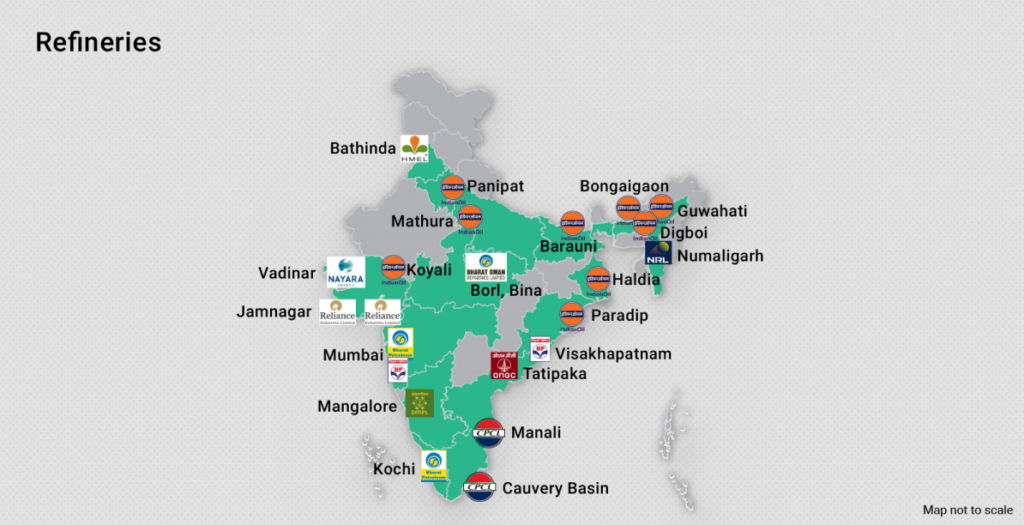
After unloading, pipelines transport crude to refineries operated by Indian Oil Corporation (IOC), Bharat Petroleum Corporation Limited (BPCL), and Hindustan Petroleum Corporation Limited (HPCL).
India operates more than 20 refineries, making it one of Asia’s leading refining hubs. According to the International Energy Agency (IEA), India’s refining capacity exceeds domestic fuel demand, allowing exports of petrol, diesel, and aviation turbine fuel.
The Strategic Petroleum Reserve: India’s Emergency Cushion
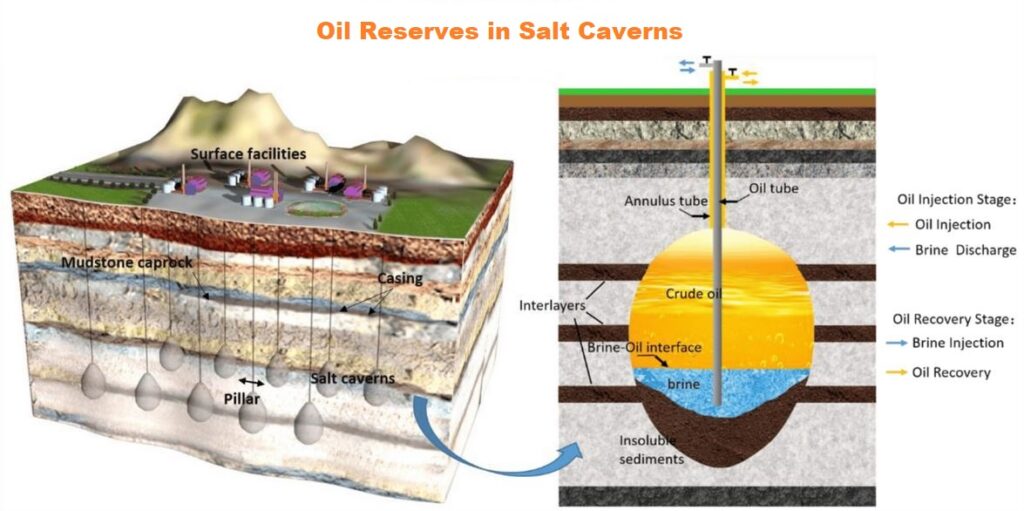
A central pillar of the policy under which India Imports Oil From 40 Countries is its Strategic Petroleum Reserve (SPR). The reserves are managed by Indian Strategic Petroleum Reserves Limited (ISPRL).
The first phase of India’s SPR includes underground rock caverns at:
- Visakhapatnam (Andhra Pradesh)
- Mangaluru (Karnataka)
- Padur (Karnataka)
Together, these facilities store about 5.3 million tonnes of crude oil, equivalent to roughly nine to ten days of national consumption.
The government has approved expansion projects, including additional storage at Chandikhol in Odisha and expanded capacity at Padur. These projects aim to increase India’s emergency coverage in line with global best practices.
Strategic reserves are not used for routine market management. Officials describe them as insurance against severe supply shocks, such as war, sanctions, or major shipping disruptions.
Commercial Stocks and Refinery Inventories
Beyond strategic reserves, oil marketing companies and refiners maintain commercial inventories. These include crude stocks at ports and storage tanks near refineries.
Industry experts estimate that when combined with SPR holdings, India’s total oil buffer provides several weeks of coverage during supply disruption. However, this depends on refinery throughput, import schedules, and domestic demand levels.
The IEA recommends that major oil-consuming nations hold emergency reserves equivalent to at least 90 days of net imports. While India is not yet bound by that requirement, its expanding reserves reflect alignment with international energy security standards.
India’s Oil Security Framework
| Component | Details | Strategic Importance |
|---|---|---|
| Import Diversification | India Imports Oil From 40 Countries including Russia, Iraq, Saudi Arabia, U.S., Brazil, Nigeria | Reduces dependence on a single region |
| Import Dependency | Over 85% of crude needs met through imports | Highlights vulnerability to global shocks |
| Strategic Petroleum Reserve | 5.3 million tonnes stored underground | Emergency buffer during crises |
| Refining Capacity | Over 250 million tonnes per annum | Enables fuel exports and supply flexibility |
| Shipping Routes | Strait of Hormuz, Suez Canal, Indian Ocean routes | Vulnerable global chokepoints |
| Crisis Response | Coordinated SPR release and import re-routing | Maintains domestic fuel stability |
Geopolitical Risks and Energy Security
Global oil markets remain sensitive to political instability. Tensions in West Asia, sanctions regimes, and maritime security risks can disrupt trade flows.
For India, energy security is directly linked to economic stability. Crude oil imports account for a large portion of the country’s trade deficit. A sustained rise in global crude prices can widen fiscal pressures and affect inflation.
Professor Arunabha Ghosh, Chief Executive of the Council on Energy, Environment and Water (CEEW), has said that while diversification strengthens resilience, India must accelerate renewable energy adoption to reduce long-term vulnerability.
Currency and Price Volatility
Crude oil is priced primarily in US dollars. Therefore, fluctuations in the rupee-dollar exchange rate influence India’s import costs.
A weaker rupee increases the domestic cost of oil, even if global prices remain stable. Policymakers closely monitor currency trends alongside Brent crude benchmarks to manage fiscal planning.
The Reserve Bank of India (RBI) factors oil price assumptions into inflation forecasts and monetary policy decisions.
Environmental and Energy Transition Considerations
While India Imports Oil From 40 Countries, it is also pursuing ambitious renewable energy targets. The government aims to expand solar, wind, and green hydrogen capacity under national climate commitments.
However, experts caution that oil demand will remain strong in the near term. Rapid urbanisation, industrial expansion, and growing vehicle ownership continue to drive consumption.
The transition to electric mobility and cleaner fuels is gradual. As a result, crude oil remains central to India’s energy mix for the foreseeable future.
Crisis Response Mechanism
During severe global disruptions, the Ministry of Petroleum and Natural Gas coordinates with refiners and shipping operators. Authorities can release crude from strategic reserves in a calibrated manner.
In 2021, India participated in a coordinated release of reserves alongside other major economies to stabilise global oil prices. Such measures demonstrate India’s growing role in global energy governance.
Long-Term Outlook
India’s energy demand is expected to grow steadily in the coming decades, according to projections by the International Energy Agency. As industrial output and transportation needs expand, crude oil will remain a critical input.
The strategy under which India Imports Oil From 40 Countries reflects both pragmatism and preparedness. It combines market-driven sourcing decisions with state-backed emergency planning.
Future expansions of strategic reserves and refining infrastructure are likely as policymakers seek to strengthen energy resilience.
Conclusion
India Imports Oil From 40 Countries to reduce geopolitical risk, enhance bargaining power, and secure stable supplies in uncertain times. Supported by underground strategic reserves, commercial inventories, and a strong refining base, the country has built a layered energy security system.
While vulnerabilities remain due to global price volatility and import dependence, diversification and preparedness have strengthened India’s ability to manage disruptions. As global markets evolve, maintaining this balance between diversification, strategic storage, and energy transition will remain central to India’s economic stability.