

Gold does not wait for official announcements. It reacts to uncertainty faster than any stock index or currency. Over the past month, global tensions pushed investors toward safety, and in India the reaction was immediate. The Gold Rate in India surged sharply as buyers rushed to protect their wealth, and the Gold Rate in India quickly approached record levels within just a few weeks. Many market watchers were surprised not by the rise itself, but by the speed of the rally. This sudden surge tells a bigger story. Investors today are worried about inflation, geopolitical instability, and financial market volatility. When people begin doubting traditional investments like equities or bonds, they naturally shift to assets that have survived centuries of economic crises. Gold has always held that position. In the current environment, gold is no longer just a festive purchase or wedding ornament it has again become a financial shield.

The recent rise in the Gold Rate in India is not caused by a single factor. It is a combination of global gold prices, currency movements, and domestic demand. As international bullion prices strengthened due to safe-haven buying, the Indian rupee weakened slightly against the US dollar. Because India imports most of its gold, a weaker rupee automatically increases domestic prices. At the same time, buyers began purchasing early, anticipating higher prices ahead of the wedding season. The Gold Rate in India therefore reflects both global fear and local consumer psychology.
Gold Rate Skyrockets After Iran-US Flashpoint
| Factor & Indicator | Current Observation |
|---|---|
| Domestic Price & Level | Around ₹81,300 per 10 grams |
| Rally Duration & Timeframe | Approximately 30 days |
| Main Trigger & Cause | Iran–US geopolitical tension |
| Global Market Reaction & Trend | Increased safe-haven demand |
| Central Bank Activity & Strategy | Continued gold accumulation |
| Currency Movement & Impact | Rupee weakness supported prices |
| Investor Behaviour & Pattern | Shift from equities to bullion |
| Seasonal Demand & Buying | Pre-wedding and festive demand rising |
The current rally represents a shift in global sentiment. Investors are becoming cautious about financial systems, currencies, and economic stability. Gold is gaining importance because it offers security during unpredictable times. The rise toward ₹81,300 is not just about one geopolitical event. It reflects deeper concerns inflation risks, monetary policy uncertainty, and market volatility. As long as uncertainty continues, gold is likely to remain strong. If global tensions persist and interest rates eventually decline, the Gold Rate in India could move significantly higher in the coming months. The real spike may still be ahead, not because gold suddenly changed, but because the world around it has become less predictable.
Why The Iran-US Flashpoint Matters
- Geopolitical conflicts influence gold almost instantly. The tension between Iran and the United States raised fears about disruptions in oil supply routes, especially in the Middle East. Even a small threat to energy transportation affects crude oil prices worldwide.
- Higher oil prices lead to higher inflation expectations. When inflation rises, the purchasing power of money falls. Investors then move toward assets that historically maintain value. Gold becomes attractive because it is independent of any government policy or corporate earnings.
- This is exactly why the Gold Rate in India reacted quickly. Investors were not waiting for an actual war; the possibility itself was enough. Financial markets dislike uncertainty, but gold benefits from it.
How Much Has Gold Actually Moved?
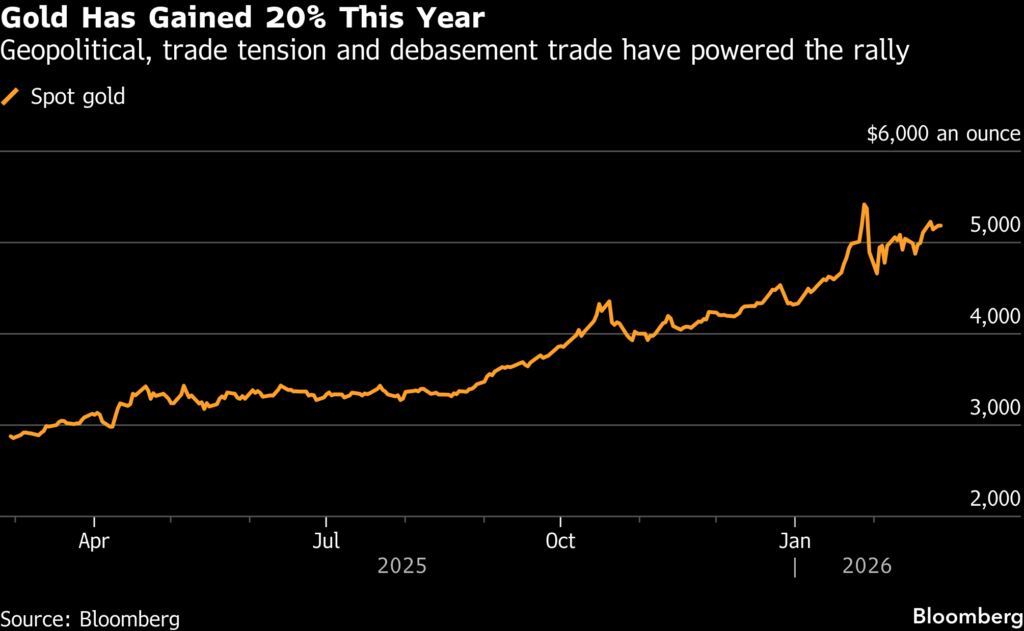
The speed of the rally is what makes it remarkable. Gold usually climbs gradually over months, but this time it rose rapidly within weeks. A movement toward ₹81,300 in roughly 30 days signals strong defensive buying.
Several market developments supported this rise:
- Increased interest in gold investment products
- Higher physical bullion purchases
- Rising volatility in stock markets
- Investors reallocating funds toward safer assets
This type of rally is typically driven by protection, not speculation. People are not buying gold expecting quick profits; they are buying it to preserve capital.
Central Banks Are Quietly Driving The Trend
A major force behind rising gold prices is central bank accumulation. Many countries are increasing gold reserves to reduce dependence on foreign currencies. This shift has been happening for several years but has accelerated recently. Central banks do not sell gold frequently. Once they buy, they hold for long periods. This creates a strong demand base in the global market. Even when prices dip slightly, institutional buyers step in. Because of this steady background demand, the Gold Rate in India rarely falls sharply. The market now has a strong support system underneath it.
Impact On Indian Markets And Buyers
India has a unique relationship with gold. It is not only an investment but also a cultural asset. Weddings, festivals, and family savings all revolve around gold ownership.
However, rising prices have changed buying habits. Retailers report noticeable shifts:
- Customers purchasing lighter jewellery
- Increased exchange of old ornaments
- Growing interest in coins and bars
- More planned purchases instead of impulsive buying
Even though prices are high, demand continues. Families still consider gold a secure form of savings. The Gold Rate in India influences purchase quantity, not purchase intention. Currency movement also plays an important role. When the rupee weakens, imported gold becomes more expensive. This adds to domestic price increases, even if global prices remain stable.
What Could Trigger the Next Big Spike?
Many analysts believe the rally may continue. Several conditions could push prices higher.
- Geopolitical escalation: If tensions expand or trade routes face disruption, safe-haven demand could rise dramatically.
- Interest rate cuts: When central banks reduce interest rates, fixed deposits and bonds provide lower returns. Investors then turn to gold.
- Persistent inflation: If inflation remains elevated, gold becomes a natural hedge against purchasing power loss.
- Stock market correction: A sharp fall in equity markets typically sends investors toward precious metals.
- Under these circumstances, the Gold Rate in India could move to new highs.
Could Prices Fall?
Gold rarely rises continuously without pauses. Short-term corrections are possible if geopolitical tensions ease or the US dollar strengthens significantly. However, any decline may be limited.
Three strong supports currently exist:
- Central bank buying
- Global uncertainty
- Inflation concerns
These factors reduce the probability of a deep fall. Temporary declines may occur, but long-term support remains strong.
What Investors Should Consider
Gold works best as financial protection, not as a short-term trade. Financial planners often recommend allocating a portion of investments to gold rather than investing entirely.
Smart strategies include:
- Buying gradually instead of investing all at once
- Using gold bonds or exchange-traded funds
- Holding for long-term wealth protection
Investors who track the Gold Rate in India daily sometimes react emotionally. However, gold rewards patience rather than timing.
Read More:-
FAQs
1. Why has the Gold Rate in India increased recently?
The rise is mainly due to geopolitical tensions, inflation fears, and investors shifting toward safe-haven assets.
2. Will gold prices continue rising?
If global uncertainty and inflation remain high, prices may continue upward, though short-term corrections can occur.
3. Is it safe to invest in gold now?
Gradual investment is generally safer than investing a large amount at peak prices.
4. What factors affect gold prices in India?
International bullion rates, rupee-dollar exchange rate, import duties, and global economic conditions influence domestic prices.