

The Ethereum makes game-changing decision story centres on a sweeping technical roadmap announced by the Ethereum Foundation and core developers in early 2026. The upgrades aim to increase transaction capacity, reduce fees, and strengthen security. Analysts say the move could shift cryptocurrency from a largely speculative market into a foundational layer for financial services and internet-based applications worldwide.
Ethereum Makes Game-Changing Decision
| Key Area | What Is Changing | Why It Matters |
|---|---|---|
| Network Validation | Permanent proof-of-stake system | Reduces energy use and operational cost |
| Transaction Fees | Layer-2 scaling rollout | Cheaper payments and transfers |
| Security | Block production redesign | Lower risk of manipulation |
| Adoption | Institutional interest rising | Possible mainstream financial integration |
| Global Impact | Cross-border payments | Faster remittances and settlements |
Understanding Ethereum’s Role in Cryptocurrency
Ethereum is the world’s second-largest cryptocurrency platform after Bitcoin, but its purpose is broader. Bitcoin primarily operates as a digital store of value. Ethereum, by contrast, acts as a programmable infrastructure for applications.
Developers use the network to create “smart contracts”, automated agreements that execute when conditions are met. These contracts allow services such as digital lending, asset trading, insurance, and identity verification without intermediaries.
The platform was introduced in 2015 by Vitalik Buterin and a group of software engineers who envisioned blockchain technology functioning like a global computer rather than only a payment system.
Buterin said during a developer session that the network’s objective is “a neutral platform that belongs to everyone and cannot be controlled by any single entity.”
Why the Ethereum Makes Game-Changing Decision Matters
The announcement responds to one of blockchain technology’s biggest obstacles: scalability.
Earlier versions of Ethereum struggled to process heavy demand. During peak usage, transaction fees rose sharply, making small payments impractical.
Moving Beyond Trading
Many economists believe cryptocurrency adoption has stalled because most users treat digital tokens as investment assets rather than tools.
Professor Eswar Prasad of Cornell University noted in research on digital currencies that programmable financial networks “have the potential to reshape payment systems and reduce dependence on centralised financial intermediaries.”
The upgrades aim to make routine usage possible — from remittances to online purchases — by lowering processing costs and increasing transaction speed.
Technical Changes Explained
Layer-2 Scaling
Ethereum developers are implementing a layered architecture. Instead of processing every transaction directly, secondary networks called “rollups” handle large transaction batches.
These are then recorded on the main blockchain for verification.
This method:
- increases speed
- reduces congestion
- lowers transaction costs
Developers compare the system to highway service roads. Smaller transactions move off the main lane while security remains centralised.
Proposer-Builder Separation
Another major change restructures block creation. Previously, the same participant could assemble and publish transaction blocks, creating opportunities for manipulation.
Under the new design, responsibilities are divided. Researchers say this reduces the risk of unfair transaction ordering and improves transparency.
Cryptographic Enhancements
Ethereum is also exploring integration of advanced cryptographic verification techniques known as zero-knowledge proofs. These allow transaction validation without revealing sensitive user information, which may enable private yet verifiable financial activity.
Environmental Impact
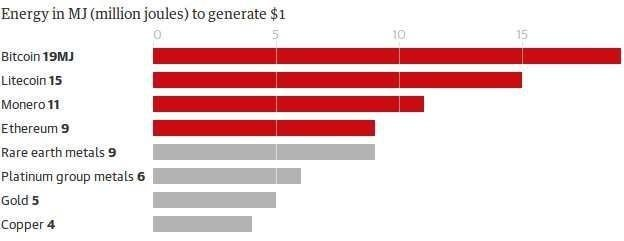
Environmental concerns have significantly influenced cryptocurrency policy debates worldwide.
Traditional mining requires large amounts of electricity because computers compete to solve complex mathematical problems. Ethereum’s new validation method replaces this process.
Instead of mining, participants “stake” digital coins as collateral to validate transactions.
The Crypto Carbon Ratings Institute estimated the network’s electricity consumption declined by more than 99 percent after the change. Sustainability advocates say this reduction could remove a major barrier to institutional adoption.
Large investment funds increasingly consider environmental, social and governance (ESG) criteria before investing in digital assets.
Economic Implications
The most immediate impact may appear in decentralised finance, or DeFi.
DeFi platforms operate without banks, allowing users to:
- borrow digital assets
- earn interest
- trade tokens
- provide liquidity
According to DeFiLlama analytics data, tens of billions of dollars remain locked in these services globally despite market volatility.
The Bank for International Settlements has stated decentralised platforms could improve settlement efficiency but also pose risks if widely adopted without safeguards.
Financial technology analyst Nitin Sharma said cheaper blockchain transactions could “compete with remittance corridors where transfer fees remain high.”
This is particularly relevant in countries with large overseas worker populations.
Impact on India and Emerging Economies
India is among the world’s largest recipients of remittances. Lower-cost blockchain transfers could significantly affect payment systems.
Currently, international transfers may take several days and incur intermediary charges.
A blockchain-based transfer could settle within minutes.
The Reserve Bank of India (RBI) has expressed caution about private cryptocurrencies but continues to explore central bank digital currency (CBDC) technology. Experts say Ethereum-like infrastructure could indirectly influence how digital rupees interact with private financial networks.
In Southeast Asia and Africa, small businesses increasingly test blockchain payments for cross-border trade where banking access is limited.
Regulatory Perspective
Regulators globally remain divided.
The European Union has implemented the Markets in Crypto-Assets (MiCA) regulation to standardise oversight. The United States continues to debate whether certain digital tokens qualify as securities.
Authorities typically focus on:
- consumer protection
- fraud prevention
- anti-money-laundering compliance
Central banks also examine whether decentralised systems could weaken monetary policy if widely adopted.
Market and Industry Reaction
Financial markets reacted cautiously to the news.
Investors welcomed technological progress but remain wary of implementation risks. Previous network upgrades in the crypto industry have sometimes produced unexpected technical disruptions.
Technology historian Finn Brunton of the University of California, Davis said infrastructure innovations rarely appear dramatic at first. “Their importance becomes clear only when society depends on them daily,” he noted during a public lecture.
Ethereum still faces competition from other programmable blockchains offering faster speeds and lower fees. However, analysts say Ethereum’s large developer community remains a strong advantage.
Risks and Criticism
Despite optimism, experts identify several concerns.
Technical Risks
Complex upgrades may introduce software vulnerabilities. Blockchain networks operate continuously, so errors could affect large financial values.
Market Volatility
Cryptocurrency prices remain unstable. Adoption does not guarantee price stability, and speculative trading may continue.
Regulatory Uncertainty
Governments could impose restrictions that limit usage or affect institutional participation.
Security and Fraud
Although blockchain records are secure, users remain vulnerable to hacking, scams, and lost digital keys.
Historical Timeline of Ethereum Development
| Year | Event |
|---|---|
| 2015 | Ethereum network launched |
| 2017 | Rapid growth of token fundraising projects |
| 2020 | Expansion of decentralised finance |
| 2022 | Transition from mining to staking |
| 2026 | New scaling and security roadmap announced |
This progression shows a shift from experimental technology to potential financial infrastructure.
Broader Context: Future of Cryptocurrency
The wider cryptocurrency sector is undergoing a transformation.
Early adoption focused on ideological and speculative interest. Current development emphasises practical usage.
Possible future applications include:
- automated insurance contracts
- supply-chain verification
- digital identity systems
- tokenised shares and bonds
If successful, users may interact with blockchain services indirectly through apps, much like the internet today operates behind everyday services.
Conclusion
Ethereum’s upgrade roadmap represents a strategic effort to reposition blockchain technology from investment speculation to operational infrastructure.
Whether the project succeeds depends on adoption, regulation, and reliability. However, analysts broadly consider the changes among the most significant developments in the cryptocurrency sector since the creation of programmable smart contracts.
The Ethereum makes game-changing decision initiative therefore reflects not only a technical update but also a shift in how digital networks may underpin financial and online systems in the coming decade.