

The global energy market has once again taken center stage as crude prices surge to new highs. With crude oil above $95 and markets under pressure, investors across the world are reassessing their strategies and preparing for possible economic ripple effects. Rising oil prices typically spark concerns about inflation, supply chain costs, and tighter monetary policies. When energy becomes more expensive, industries dependent on transportation, logistics, and manufacturing often experience higher operating costs, which can reduce profit margins and put pressure on stock markets. However, the story is not entirely negative. While several sectors struggle during periods when crude oil above $95 and markets under pressure dominates headlines, certain companies benefit directly from the same trend. Oil exploration companies, energy infrastructure firms, and government-owned petroleum companies often see stronger earnings when crude prices climb. For investors who understand how commodity cycles work, rising oil prices can reveal opportunities that are sometimes overlooked during market volatility.

The situation where crude oil above $95 and markets under pressure affects global financial systems usually shifts investor attention toward energy producers. Public Sector Undertakings (PSUs) in India that operate in oil exploration, refining, and gas infrastructure can benefit from such a commodity cycle. These companies are closely tied to the global energy market and often experience improved financial performance when oil prices rise. When crude oil prices move higher, upstream companies that produce oil see immediate benefits because the crude they sell fetches better prices. At the same time, refining companies and natural gas infrastructure providers may also benefit depending on refining spreads, demand for fuel, and energy consumption trends. Because of this, PSU oil and gas stocks often become an important focus for investors during times when crude oil above $95 and markets under pressure is a dominant market narrative.
Crude Oil Above $95 And Markets Under Pressure
| PSU Stock | Sector & Industry | Key Advantage When Oil Prices Rise | Market Role & Strategic Importance |
|---|---|---|---|
| ONGC | Oil Exploration & Production | Higher crude prices increase revenue per barrel | India’s largest upstream oil producer |
| Oil India | Oil Exploration & Production | Improved profitability from crude production | Strong upstream presence in India |
| GAIL | Natural Gas Transmission & Marketing | Rising energy demand boosts gas infrastructure usage | Major natural gas pipeline operator |
| BPCL | Oil Refining & Fuel Marketing | Potential improvement in refining margins & fuel demand | Large downstream PSU energy company |
| HPCL | Oil Refining & Distribution | Benefits from refining spreads & fuel consumption | Key player in India’s petroleum distribution |
Periods when crude oil above $95 and markets under pressure dominate financial headlines can create uncertainty for investors. Higher oil prices can increase inflation, raise operating costs for businesses, and influence central bank policies. However, these same conditions can also create opportunities within the energy sector. PSU oil and gas companies involved in exploration, refining, and natural gas infrastructure often benefit from rising crude prices. Companies such as ONGC, Oil India, GAIL, BPCL, and HPCL remain important players in India’s energy landscape. Their financial performance is closely tied to global energy trends, which makes them particularly relevant during commodity cycles. For investors who understand how energy market’s function, periods of high oil prices can present strategic opportunities. By analyzing global oil trends, government policies, and energy demand patterns, investors can identify companies that are well positioned to benefit even when broader markets face pressure.
Why Rising Crude Oil Prices Pressure the Broader Market
- When crude oil above $95 and markets under pressure becomes a key economic theme, the impact spreads across several sectors of the economy. Oil is one of the most widely used commodities globally, influencing transportation, manufacturing, aviation, shipping, and even agriculture. As oil prices rise, companies face higher fuel costs and transportation expenses. Businesses often pass some of these costs to consumers, which can lead to rising inflation. Higher inflation affects purchasing power and may force central banks to keep interest rates elevated for longer periods.
- For the stock market, this environment creates uncertainty. Investors worry about slower economic growth and weaker corporate earnings. Sectors such as airlines, logistics companies, paint manufacturers, chemical companies, and fast-moving consumer goods businesses are particularly sensitive to fuel cost increases. This explains why financial markets can become cautious when crude oil above $95 and markets under pressure becomes a widely discussed topic in global economic news.
Upstream Oil PSUs: Direct Beneficiaries Of Higher Oil Prices
- Among all energy companies, upstream oil producers tend to benefit the most when crude prices rise. These companies explore, drill, and produce crude oil, which means their earnings increase when oil prices move higher.
- Companies such as ONGC and Oil India generate revenue by selling crude oil in global or domestic markets. When crude oil prices climb above $95 per barrel, these companies receive higher realizations for the oil they produce. Since the cost of production remains relatively stable, the increase in price directly improves their profit margins.
- Because of this relationship, investors often pay close attention to upstream oil companies during periods when crude oil above $95 and markets under pressure is influencing market sentiment.
- Higher crude prices can lead to better quarterly earnings, improved cash flows, and sometimes higher dividends for shareholders of these companies.
Refining And Marketing PSUs: A Mixed but Opportunistic Impact
Oil refining and marketing companies operate differently from upstream producers. Instead of producing crude oil, these companies purchase crude oil and refine it into petroleum products such as petrol, diesel, aviation fuel, and petrochemicals. Companies like BPCL and HPCL play an essential role in India’s fuel distribution network. Their profitability depends largely on refining margins, which represent the difference between the cost of crude oil and the price of refined fuel products. When oil prices rise quickly, refining margins can fluctuate. However, if fuel demand remains strong and global refining spreads are healthy, refining companies can still maintain stable earnings. In times when crude oil above $95 and markets under pressure dominates the financial landscape, investors carefully monitor refining margins and government pricing policies because they significantly affect the profitability of these companies.
Natural Gas Players Also Gain Strategic Importance
- Natural gas is becoming an increasingly important part of the global energy mix. Many countries are shifting toward natural gas as a cleaner alternative to traditional fossil fuels.
- Companies like GAIL operate natural gas pipelines, supply gas to industries, and support the development of energy infrastructure. As crude oil prices rise, industries sometimes turn to natural gas as a relatively cheaper energy alternative.
- This shift can increase demand for gas transportation and distribution networks. Because of this, natural gas infrastructure companies can experience steady growth even when the broader market faces challenges due to high oil prices.
- India is also actively promoting the development of a gas-based economy, which could create long-term growth opportunities for companies involved in gas infrastructure. This makes them particularly relevant during periods when crude oil above $95 and markets under pressure becomes a key economic concern.
Investor Sentiment Toward PSU Energy Stocks
Over the past few years, investor sentiment toward PSU stocks has improved significantly. Historically, public sector companies were often overlooked by investors due to concerns about efficiency and government intervention. However, reforms, improved governance standards, and stronger financial performance have helped several PSU companies regain investor confidence. Energy PSUs have particularly benefited from favorable commodity cycles and strong demand for oil and gas. Many of these companies also offer attractive dividend yields, which can be appealing to long-term investors. During periods when crude oil above $95 and markets under pressure, investors often see energy stocks as a potential hedge against inflation and commodity volatility. Because energy companies directly benefit from rising oil prices, they can sometimes outperform broader market indices during such periods.
Risks Investors Should Keep in Mind
- Despite the opportunities, investing in PSU oil companies carries certain risks. Government policies play a significant role in determining the profitability of oil marketing companies in India.
- For example, if the government decides to control fuel prices to manage inflation, oil marketing companies may experience margin pressure even when global crude prices are high.
- Geopolitical developments can also influence oil prices. Conflicts, supply disruptions, or changes in global energy demand can quickly shift crude oil prices in either direction.
- Another risk comes from global economic slowdowns. If economic growth weakens significantly, demand for oil may decline, which could eventually push oil prices lower.
- Investors should carefully evaluate these risks before making investment decisions, even when crude oil above $95 and markets under pressure appears to create opportunities in the energy sector.
The Bigger Picture for Energy Markets
- The current environment where crude oil above $95 and markets under pressure reflects deeper structural shifts in global energy markets. Supply constraints, geopolitical tensions, and resilient demand continue to shape the outlook for oil prices. Countries around the world are trying to balance energy security with the transition toward renewable energy. Despite the growth of renewable energy sources, oil and gas remain essential components of the global energy system.
- For India, ensuring a stable supply of oil and gas is critical for economic growth. PSU energy companies play an important role in maintaining energy security, managing supply chains, and supporting industrial development. Because of their strategic importance, these companies often remain in focus when oil prices rise sharply.
Read More:-
Sensex Crash Sends Shockwaves Through Markets – Here’s What Investors Need to Know
FAQs
1. Why do PSU oil companies benefit when crude oil prices rise?
Upstream oil companies produce crude oil, so higher oil prices increase their revenue and profit margins. As crude prices rise, the value of the oil they sell also increases.
2. Which PSU companies benefit the most from rising oil prices?
Companies involved in oil exploration and production, such as ONGC and Oil India, benefit the most because their earnings are directly linked to crude oil prices.
3. Does high crude oil always harm the stock market?
Not always. While several sectors may struggle with higher fuel costs, energy companies and oil producers often perform well when oil prices increase.
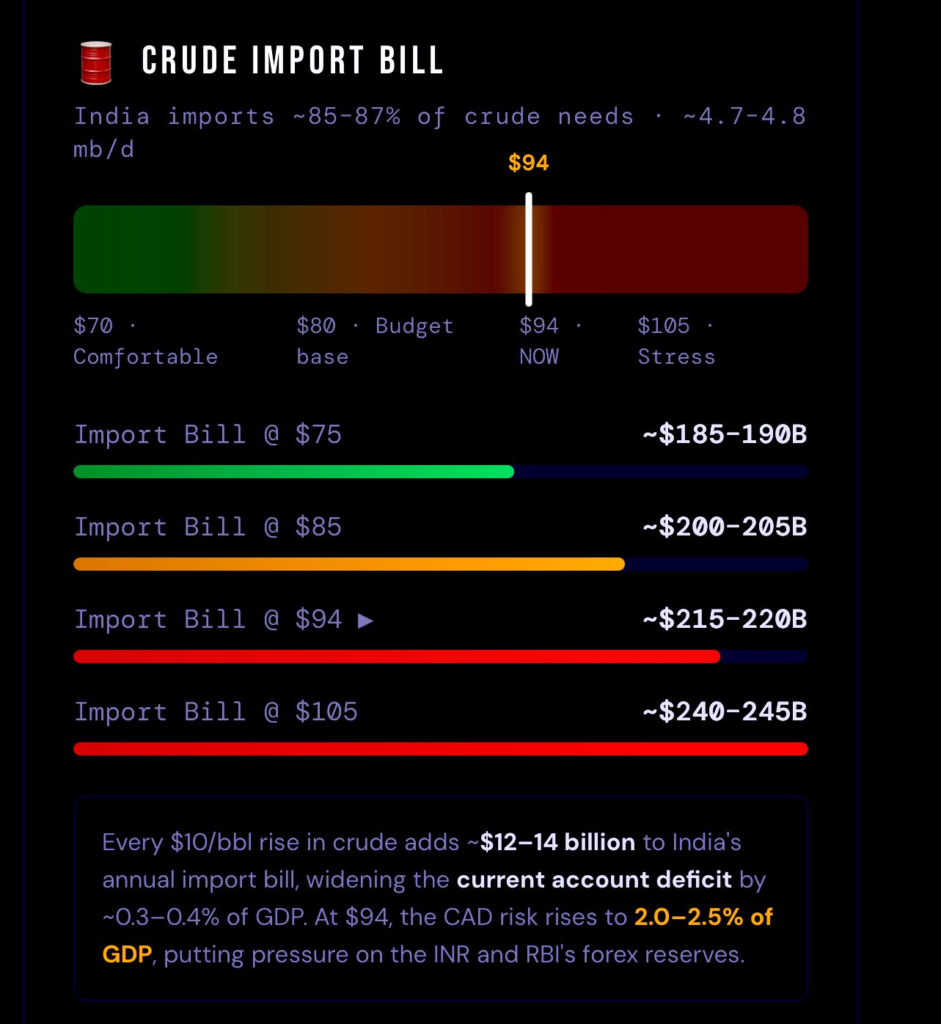
4. How does crude oil above $95 affect the Indian economy?
Higher oil prices can increase inflation and import costs for India, but they may also improve the profitability of domestic oil and gas companies.