
India’s proposed CAFE III Rules fuel-efficiency standards could significantly reshape the country’s electric-vehicle policy by reconsidering whether battery-powered cars should automatically be classified as “zero-emission.” Officials are studying a method that counts emissions linked to electricity generation, not just exhaust pipes, a shift that could affect automakers’ compliance strategies, vehicle design, and long-term climate regulation.
CAFE III Rules
| Key Fact | Detail |
|---|---|
| Policy Timeline | CAFE III expected to apply roughly 2027–2032 |
| Core Change | EVs may be evaluated using lifecycle emissions |
| Impact | Could alter compliance credits and vehicle technology strategies |
Policy planners say the CAFE III Rules reflect a broader shift: environmental regulation is moving beyond vehicle exhaust to entire energy systems. The final framework will likely shape how India balances industrial growth, energy security, and long-term emission reduction goals over the next decade.
What the CAFE III Rules Propose
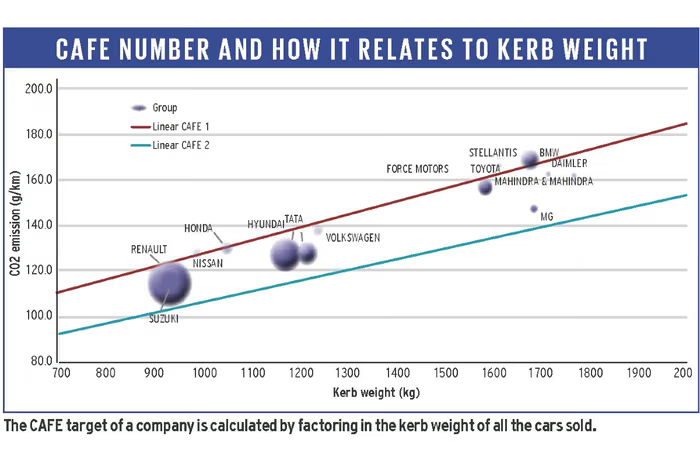
The Corporate Average Fuel Efficiency (CAFE) framework regulates the average carbon dioxide emissions of an automaker’s entire fleet rather than individual vehicles. India introduced its first standards in 2017 to improve fuel efficiency standards and reduce oil consumption.
The upcoming CAFE III Rules, now under consultation between the Ministry of Heavy Industries and the Bureau of Energy Efficiency (BEE), aim to further reduce transportation emissions as India works toward its climate commitments under the Paris Agreement.
Currently, electric vehicles are counted as producing zero grams of carbon dioxide per kilometer because they lack an exhaust pipe. Policymakers are now evaluating whether that method accurately represents real-world electric vehicle emissions.
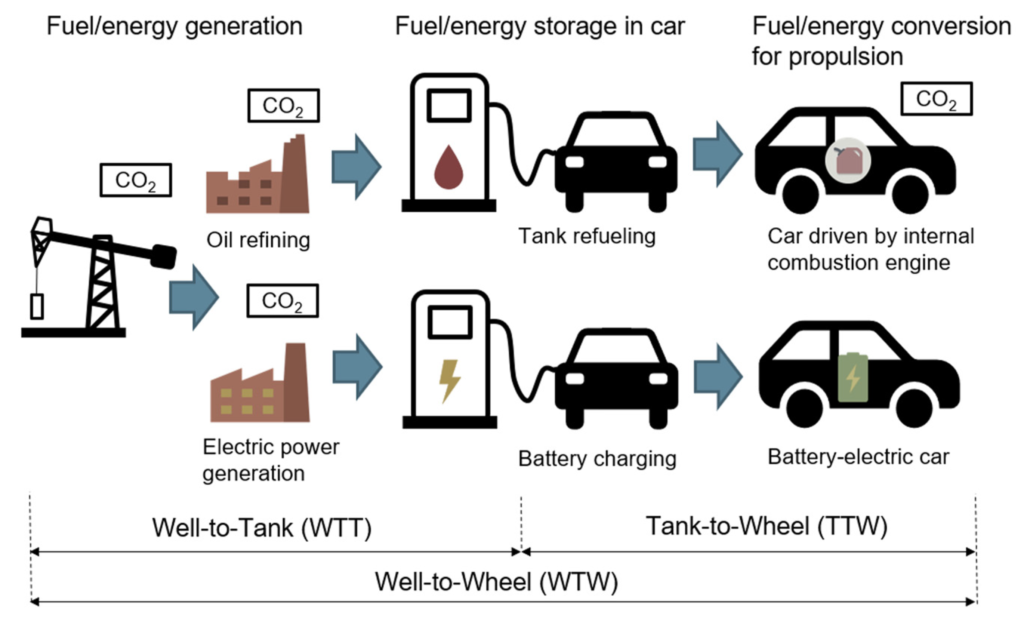
A senior government official involved in discussions said the new framework could consider “well-to-wheel” emissions — pollution created during electricity production used to charge EVs.
“The objective is accuracy. Tailpipe emissions alone do not capture the full environmental impact,” the official said on condition of anonymity because the policy is still under review.
Why Electric Vehicles May No Longer Be Automatically “Zero-Emission”
Tailpipe vs Lifecycle Emissions
Under existing rules, emissions accounting measures only what comes out of a vehicle’s exhaust. Electric cars have none. However, electricity generation often involves fossil fuels.
India still relies heavily on coal-based electricity generation, according to data from the Central Electricity Authority. As a result, emissions occur at the power plant instead of the road.
Transport researchers describe this difference as:
- Tank-to-wheel emissions (vehicle exhaust)
- Well-to-wheel or lifecycle emissions (energy production + vehicle use)
Policy experts say the change does not imply EVs are dirtier than gasoline cars. Instead, it refines how regulators measure climate impact.
Dr. Anup Bandivadekar, program director at the International Council on Clean Transportation (ICCT), has written in research papers that lifecycle accounting “better aligns transportation policy with actual climate outcomes,” particularly in countries dependent on coal power.
A Short History: Why Fuel Efficiency Standards Exist
Fuel efficiency standards were originally created worldwide not for climate change, but for energy security.
After the 1970s oil crisis, countries including the United States and Japan introduced fleet fuel economy regulations to reduce dependence on imported oil. India adopted similar logic decades later due to rising petroleum imports.
Today India imports more than 85% of its crude oil. Transport remains one of the largest oil-consuming sectors.
Experts say the CAFE III Rules therefore serve two goals:
- Reduce carbon emissions
- Reduce oil imports
An energy economist at a public policy institute explained:
“Vehicle efficiency policy is both climate policy and economic policy. Every liter of fuel saved improves trade balance and energy security.”
How the Current System Benefits Automakers
Because EVs are counted as zero-emission vehicles, they generate large compliance credits.
Automakers can offset higher-emitting SUVs by selling relatively few electric cars. This flexibility helps companies meet targets without completely changing their product lineup.
Executives at several manufacturers have warned that sudden changes could disrupt investment plans.
An official at the Society of Indian Automobile Manufacturers (SIAM) said companies need predictable regulation timelines to scale electrification investments.
Environmental analysts disagree, arguing the system exaggerates environmental gains.
“You cannot separate vehicle policy from energy policy,” said a clean-transport researcher. “If the grid emits carbon, the accounting must reflect that.”
Potential Impact on the Auto Market
More Efficient EVs
The policy would encourage:
- lighter vehicles
- efficient motors
- advanced batteries
- lower energy consumption per kilometer
Instead of merely producing electric cars, companies must optimize efficiency.
Hybrids Gain Importance
Hybrid vehicles may gain regulatory significance. They reduce fuel consumption while requiring less charging electricity.
Some analysts believe India could temporarily follow a hybrid-plus-EV transition instead of an EV-only strategy.
How India Compares With Other Countries
The policy debate mirrors global discussions.
European Union
The EU still treats EVs as zero-emission but is exploring lifecycle battery carbon accounting.
United States
The Environmental Protection Agency (EPA) has proposed tighter vehicle standards while studying upstream emissions in policy modeling.
Japan
Japan’s Top Runner program combines efficiency targets with hybrid technology incentives.
Transport policy researchers say India’s approach may become a hybrid model between EU electrification and Japanese efficiency systems.
Environmental and Energy Context
India has pledged net-zero emissions by 2070. Transport contributes a major share of urban air pollution and a significant portion of carbon emissions.
At the same time, India is rapidly expanding renewable power:
- solar installations
- wind capacity
- green hydrogen plans
Energy analysts say this matters because EV cleanliness depends on electricity sources.
If renewable energy increases, EV lifecycle emissions automatically decline.
Industry Reaction
Automakers are divided.
Companies with large EV investments are cautious, while hybrid-focused manufacturers are more supportive.
Some executives worry removing the “zero-emission” label could confuse consumers. Others believe it strengthens policy credibility.
A policy adviser involved in consultations said:
“This is not anti-EV. It is pro-accurate accounting. Electric mobility remains central to the strategy.”
What It Means for Consumers
For buyers, immediate impact will be limited.
The CAFE III Rules regulate manufacturers, not drivers.
They do not:
- ban electric cars
- affect registrations
- remove existing ownership benefits
However, long-term effects may include:
- different vehicle prices
- improved battery technology
- more hybrid options
What Scientists Say About Electric Vehicle Emissions
Multiple global studies conclude EVs still produce lower total emissions than gasoline cars over their lifetime, even in coal-dependent grids.
The reason:
Electric motors are far more energy-efficient than combustion engines.
A typical petrol engine converts only about 25–30% of fuel energy into motion, while electric motors convert about 80–90%.
This efficiency advantage remains even when electricity is partially fossil-fuel generated.
Broader Implications
The debate signals a shift in climate regulation.
Earlier policy:
Vehicle-based regulation
Future policy:
Energy-system regulation
Transportation policy will increasingly depend on electricity generation sources.
What Happens Next
The government is reviewing stakeholder feedback before finalizing the regulation. Implementation is expected later this decade.
Officials suggest gradual introduction.
“The transition must support industry investment while ensuring genuine emission reductions,” a senior official said.
FAQ
Q: Are EVs being banned?
No. The policy changes accounting, not ownership.
Q: Will subsidies stop?
No official announcement has been made.
Q: Are EVs worse than petrol cars?
No. Most research shows lower lifetime emissions.
Q: Why change the rules?
To better measure lifecycle emissions and real climate impact.