
India’s AIIMS NORCET 10 Recruitment 2026 has opened applications for thousands of Nursing Officer posts across multiple government hospitals. Conducted by All India Institute of Medical Sciences (AIIMS), New Delhi, the national eligibility examination seeks to address staffing shortages in public healthcare facilities. Applications begin in late February 2026, while computer-based examinations are scheduled for April.
AIIMS NORCET 10th Recruitment 2026
| Key Point | Details |
|---|---|
| Recruiting Authority | All India Institute of Medical Sciences (AIIMS), New Delhi |
| Exam Name | Nursing Officer Recruitment Common Eligibility Test (NORCET-10) |
| Purpose | Centralised recruitment for government hospital nurses |
| Posts | Thousands of Nursing Officer vacancies across AIIMS institutions |
| Selection | Two-stage computer-based exam |
| Job Type | Permanent Central Government position |
| Pay Scale | Level-7 pay matrix with allowances |
| National Impact | Supports expansion of tertiary healthcare services |
| Official Website | www.aiimsexams.ac.in |
The AIIMS NORCET 10 Recruitment 2026 represents a significant step in expanding India’s public healthcare workforce. The examination offers stable employment opportunities while helping newly built hospitals function effectively. Experts say the recruitment’s success will be measured not only by the number of positions filled but also by improvements in patient care accessibility across regions.
What is AIIMS NORCET 10 Recruitment 2026?
The Nursing Officer Recruitment Common Eligibility Test (NORCET) is a nationwide entrance examination used to appoint nurses in AIIMS hospitals and several affiliated government medical institutions.
The centralised recruitment model was introduced to standardise hiring across newly established AIIMS campuses. Previously, each institute conducted its own recruitment, which often led to delays and inconsistent selection standards.
An administrative official associated with AIIMS examinations explained in a recruitment briefing that the system “allows hospitals to draw candidates from a common merit list, ensuring faster appointment and transparent selection.”
The examination has gradually grown into one of India’s largest healthcare recruitment exercises.
Why the Recruitment Matters for Public Healthcare
India has significantly expanded tertiary healthcare infrastructure over the past decade. New AIIMS hospitals have been established in multiple states to improve access to specialised medical care beyond major cities.
However, hospital expansion has outpaced staffing.
According to global health estimates published by the World Health Organization (WHO), India has improved its nurse-to-population ratio, yet shortages persist in many districts, particularly in rural and semi-urban areas.
Dr. Ritu Gupta, a health systems researcher in New Delhi, said:
“Building hospitals is only the first step. Without trained nurses, operating theatres, intensive care units and emergency services cannot function efficiently.”
She noted that nurses play a central role in monitoring patients, administering treatment, and coordinating clinical care.
Vacancies and Participating Institutes
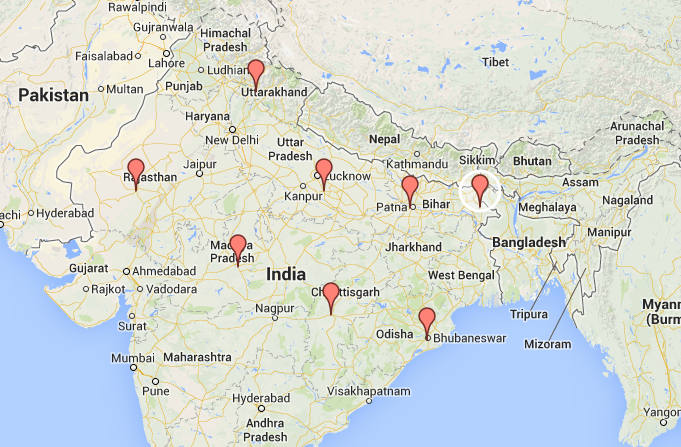
Selected candidates may be posted across various AIIMS campuses and government institutions nationwide. These include both established hospitals and newer facilities in developing regions.
The recruitment supports the government’s plan to decentralise advanced medical treatment and reduce patient migration to metropolitan hospitals.
Health policy experts say staffing new hospitals is crucial for improving emergency care capacity, especially trauma and critical care services.
Eligibility Criteria
Educational Qualification
Candidates must hold:
- B.Sc. Nursing
- Post-Basic B.Sc. Nursing
- OR General Nursing and Midwifery diploma
Applicants must also be registered with a State Nursing Council or the Indian Nursing Council.
Age Limit
The standard age range is 18 to 30 years, with relaxation for reserved categories according to government rules.
Selection Process
The recruitment follows a two-stage computer-based examination.
Stage I: Preliminary Examination
A screening examination designed to shortlist candidates.
Stage II: Mains Examination
A subject-focused examination determining final merit ranking.
Officials say the system balances large-scale screening with subject competence assessment.
Competition and Expected Difficulty
Despite thousands of vacancies, competition remains intense. Nursing entrance exams in India often attract candidates from multiple states.
Education analysts estimate that several hundred thousand applicants may compete for the posts.
Professor Anil Sharma, an education policy analyst, said:
“Government healthcare jobs remain highly attractive because they provide job security, predictable salary progression and pension benefits.”
He added that many candidates prepare for the examination for more than one year.
Salary, Benefits and Career Growth
The position falls under Level-7 of the Central Government Pay Matrix.
Compensation Includes:
- Basic pay
- Dearness allowance
- Housing allowance
- Medical benefits
- Leave travel concessions
- Pension benefits
Beyond salary, the post offers long-term career growth.
Promotion Pathway
Nursing Officer → Senior Nursing Officer → Nursing Superintendent → Chief Nursing Officer
Healthcare administrators say this structured progression attracts candidates seeking stable public sector careers.
Preparation and Candidate Experience
Candidates often undergo extensive preparation, focusing on medical-surgical nursing, pharmacology, community health and critical care.
Many rely on textbooks used in professional nursing education and mock examinations designed to simulate computer-based tests.
A nursing graduate preparing for the exam said:
“The challenge is not just the syllabus but the level of competition. Many candidates already have hospital experience.”
The exam’s national scope means candidates compete beyond their home states.
Broader Healthcare Workforce Challenge
India’s healthcare system faces dual pressures:
- Growing population
- Expanding hospital infrastructure
Experts say trained nursing staff are particularly essential in intensive care units, emergency departments and maternal care.
A health policy study published by a public health research institute found that improving nurse staffing ratios directly reduces hospital mortality and medical errors.
Dr. Gupta explained:
“Doctors design treatment, but nurses ensure treatment is delivered safely and continuously.”
Rural and Regional Impact
New AIIMS hospitals have been opened in previously underserved regions. Officials say staffing them could significantly reduce travel time for patients seeking specialised treatment.
Patients in several states currently travel hundreds of kilometres to metropolitan hospitals for advanced procedures.
Healthcare planners expect the recruitment to improve:
- Emergency response
- Maternal health
- Trauma care
- Post-operative recovery services
Exam Timeline
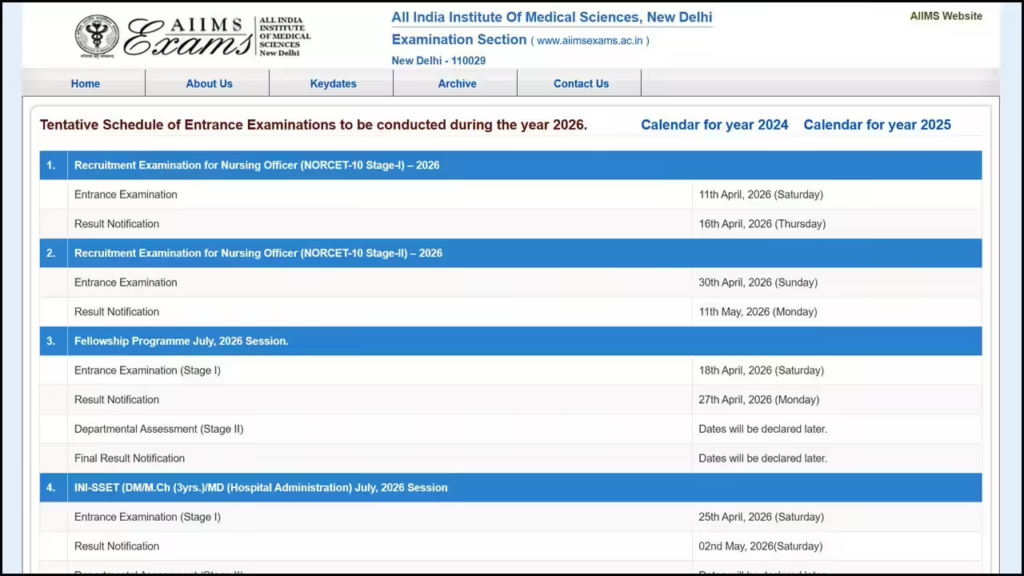
- Application start: Late February 2026
- Last date to apply: Mid-March 2026
- Preliminary exam: April 2026
- Main exam: Late April 2026
- Result: Expected May 2026
Policy Context
The recruitment aligns with broader government efforts to strengthen public health services. Over the past decade, authorities have increased medical colleges, hospital beds and training seats for healthcare professionals.
However, workforce development takes time. Training a nurse requires several years of education and clinical practice.
Health economists note that periodic large-scale recruitment drives help hospitals operate at full capacity after infrastructure expansion.