

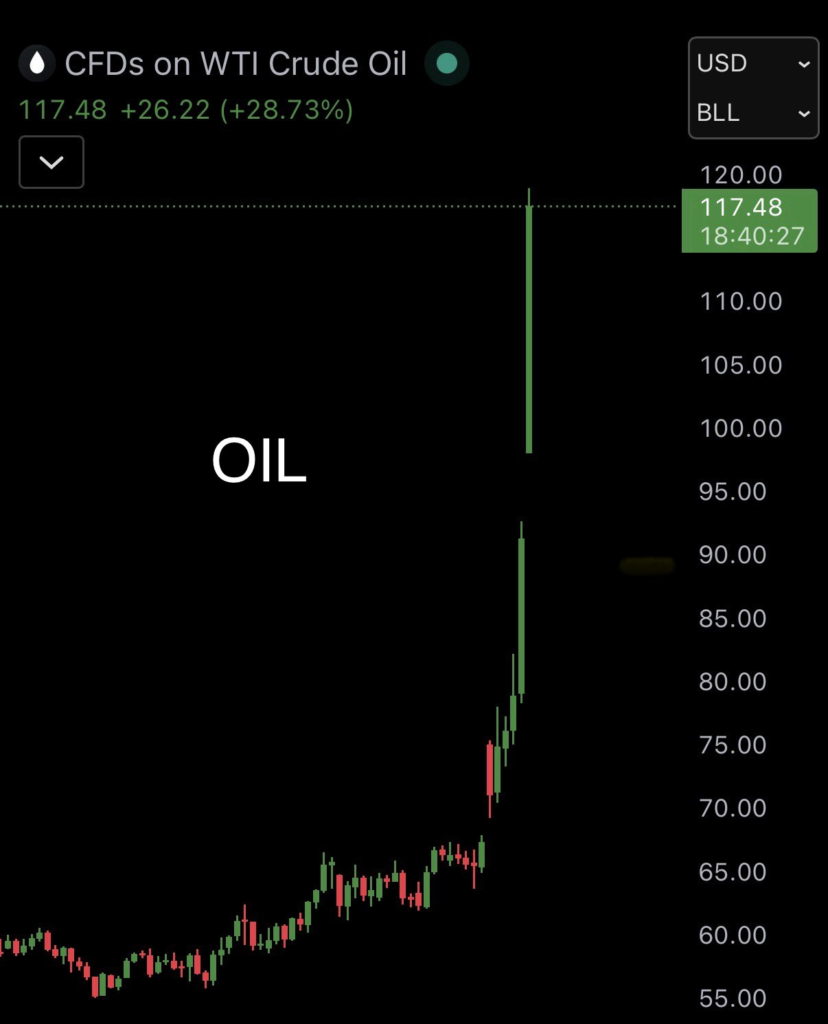
The sudden surge in crude oil prices has once again shaken investor confidence across India’s financial markets. The Brent crude spike impact on Indian stock market is now dominating conversations among traders, analysts, and policymakers. The Brent crude spike impact on Indian stock market is not just another short-term event it has the potential to reshape market sentiment and economic expectations in a matter of weeks. India’s heavy dependence on imported oil makes it especially vulnerable to global price shocks. When Brent crude rises sharply, the effects are immediate and widespread. From rising inflation to a weakening rupee, the pressure builds quickly. Investors on Dalal Street are already bracing for volatility, and the fear is that this could escalate into one of the biggest market corrections in recent years if the situation continues.

The Brent crude spike impact on Indian stock market is becoming more visible with each passing trading session. Rising oil prices increase operational costs for businesses, disrupt supply chains, and reduce profit margins across industries. The Brent crude spike impact on Indian stock market also influences investor psychology, often triggering risk-off behavior and capital outflows. What makes this situation more concerning is the broader macroeconomic impact. Higher crude prices push inflation upward, which can force the central bank to maintain tighter monetary policies. This directly affects liquidity in the system and reduces the attractiveness of equities. Understanding the Brent crude spike impact on Indian stock market is crucial right now, as it helps investors prepare for potential downside risks while identifying safer opportunities.
Oil Shock Rocks Dalal Street
| Factor | Details |
|---|---|
| Brent Crude Trend | Sharp rise due to geopolitical tensions and supply cuts |
| India’s Dependency | Imports ~85% of crude oil |
| Market Reaction | Increased volatility and selling pressure |
| Key Risk Areas | Inflation, rupee depreciation, fiscal deficit |
| Worst Hit Sectors | Aviation, paints, FMCG, logistics |
| Investor Behavior | Shift to defensive and energy stocks |
| RBI Outlook | Possible delay in rate cuts |
| Economic Impact | Slower growth if prices remain elevated |
The Brent crude spike impact on Indian stock market is a powerful reminder of how interconnected global and domestic economies are. A sudden rise in oil prices can disrupt multiple aspects of the financial system, from inflation and currency stability to corporate earnings and investor confidence. While the situation may stabilize over time, the risks remain significant. Investors need to adopt a cautious approach, focus on strong fundamentals, and stay prepared for volatility. The coming weeks will be crucial. Whether this oil shock leads to a major market downturn or remains a temporary setback will depend on how global oil prices evolve. For now, staying informed and vigilant is the best strategy.
Why the Brent Spike Matters So Much for India
- The Brent crude spike impact on Indian stock market is deeply tied to the country’s economic structure. India relies heavily on imported crude oil, which means any increase in global prices directly raises the cost of doing business.
- When oil prices rise, transportation becomes more expensive. Manufacturing costs go up, and logistics expenses increase. This eventually leads to higher prices for consumers. As inflation rises, people tend to cut back on spending, which slows down economic activity.
- From a market perspective, this creates a chain reaction. Companies report lower margins, earnings expectations are revised downward, and stock prices begin to fall. This is why oil price movements are closely tracked by investors and policymakers alike.
Immediate Impact on Dalal Street
The Brent crude spike impact on Indian stock market can be seen almost instantly on Dalal Street. The first reaction is usually a broad sell-off, especially in sectors that are directly or indirectly dependent on oil. Market volatility increases as investors try to assess the long-term implications. Many traders prefer to book profits and move to safer assets during such uncertain times. This leads to a drop in overall market sentiment. Foreign investors also play a key role here. Rising oil prices often result in capital outflows, as global funds shift toward more stable economies. This further intensifies selling pressure in Indian markets.
Sector-Wise Breakdown of the Impact
Aviation Sector Takes the First Hit
- The aviation industry is among the most affected when oil prices rise. Fuel costs account for a significant portion of airline expenses. Even a small increase in crude prices can have a major impact on profitability.
- Airlines are often forced to raise ticket prices to offset rising costs. However, higher ticket prices can reduce demand, creating a difficult situation for the industry.
Oil Marketing Companies Under Pressure
- Oil marketing companies face a complex challenge. While their input costs increase with rising crude prices, they may not always be able to pass these costs on to consumers.
- This results in reduced margins and lower profitability. Investors tend to remain cautious about these stocks during periods of high oil prices.
Paint and Chemical Companies Feel the Heat
- These industries rely heavily on crude-derived raw materials. Rising oil prices increase production costs, which directly affects their margins.
- Since competition is high, companies cannot always pass on the entire cost increase to consumers. This leads to financial pressure and weaker stock performance.
FMCG Sector Faces Indirect Impact
- The FMCG sector may not seem directly linked to oil, but it is still affected. Higher transportation and packaging costs increase overall expenses.
- At the same time, rising inflation reduces consumer purchasing power. This affects demand and slows down revenue growth.
Rupee Weakness and Its Ripple Effect
One of the most immediate consequences of rising crude prices is the weakening of the Indian rupee. As oil imports become more expensive, demand for foreign currency increases. A weaker rupee makes imports even more costly, creating additional pressure on businesses. Companies with foreign debt or import-heavy operations face increased financial stress. This also affects investor confidence. Currency instability often leads to reduced foreign investment, which further impacts the stock market.
Inflation Concerns Resurface
- The Brent crude spike impact on Indian stock market is closely linked to inflation trends. Rising fuel costs affect almost every sector of the economy.
- As transportation and production costs increase, businesses pass these costs on to consumers. This leads to higher prices for goods and services.
- When inflation rises, consumer spending slows down. This has a direct impact on corporate earnings and market performance.
Policy Dilemma for the RBI
- The Reserve Bank of India faces a difficult balancing act during such periods. On one hand, rising inflation requires tighter monetary policy. On the other hand, economic growth needs to be supported.
- If inflation continues to rise, the RBI may delay interest rate cuts or even consider increasing rates. Higher interest rates can slow down borrowing and investment.
- This creates additional pressure on the stock market, as liquidity becomes tighter.
Global Factors Behind the Brent Surge
The current surge in Brent crude prices is driven by several global factors. Geopolitical tensions, supply disruptions, and production cuts by major oil-producing countries have all contributed to the rise. These factors create uncertainty in global markets, leading to sharp price movements. Emerging economies like India are more vulnerable to such changes. Understanding these global dynamics helps investors anticipate future market trends.
Could This Trigger a Major Market Correction
- The possibility of a major market correction cannot be ruled out. The Brent crude spike impact on Indian stock market depends largely on how long oil prices remain elevated.
- If crude prices continue to rise, the combined impact on inflation, currency, and corporate earnings could lead to a deeper correction.
- However, if prices stabilize, the market may recover gradually without significant long-term damage.
What Investors Should Watch Closely
- Investors need to stay alert during this period. Tracking key indicators can help in making informed decisions.
- Oil price trends are the most important factor. Currency movements, inflation data, and central bank policies also play a crucial role.
- Monitoring foreign investment flows can provide insights into overall market sentiment.
Read More:-
India’s LPG Emergency: Shipping Ministry’s Statement Raises More Questions
FAQs
1. What is the Brent crude spike impact on Indian stock market
It refers to how rising global oil prices affect India’s economy, leading to inflation, currency depreciation, and stock market volatility.
2. Why do rising oil prices affect Dalal Street
Higher oil prices increase costs for businesses and reduce profits, which negatively impacts stock prices.
3. Which sectors are most affected by oil price increases
Aviation, oil marketing companies, paints, chemicals, and FMCG sectors are the most affected.
4. Can high crude prices weaken the rupee
Yes, higher import costs increase demand for foreign currency, leading to rupee depreciation.