

India’s 8th Pay Commission is attracting national attention as Dearness Allowance (DA) for central government employees approaches 60% in 2026. Officials and economists say the level is significant because it will influence how basic salaries, pensions and allowances are recalculated during the next nationwide public-sector pay revision cycle.
8th Pay Commission
| Issue | What It Means |
|---|---|
| DA nearing 60% | Signals inflation compensation accumulated since 2016 |
| Pay Commission | Resets basic salary, not just increments |
| Salary Impact | Estimated 30–70% rise in basic pay depending on level |
| Pension Effect | Pension increases because it depends on last basic pay |
| Economy | Could boost consumption but widen fiscal burden |
| States | State governments likely to revise salaries afterward |
Understanding the 8th Pay Commission
India revises compensation for central government employees roughly once every decade through a Pay Commission. The previous revision, implemented in 2016 under the 7th Central Pay Commission (7th CPC), restructured salaries for approximately 4.7 million employees and nearly 6.8 million pensioners, according to the Ministry of Finance.
The Pay Commission is not a simple pay raise mechanism. It is a comprehensive compensation review. It sets the pay matrix, pension rules, allowances and career progression structure for the next ten years.
A senior official in the Department of Expenditure explained:
“Allowances adjust with inflation every year, but the Pay Commission establishes the long-term salary framework. It determines compensation policy for an entire decade.”
Why the 60% DA Level Matters
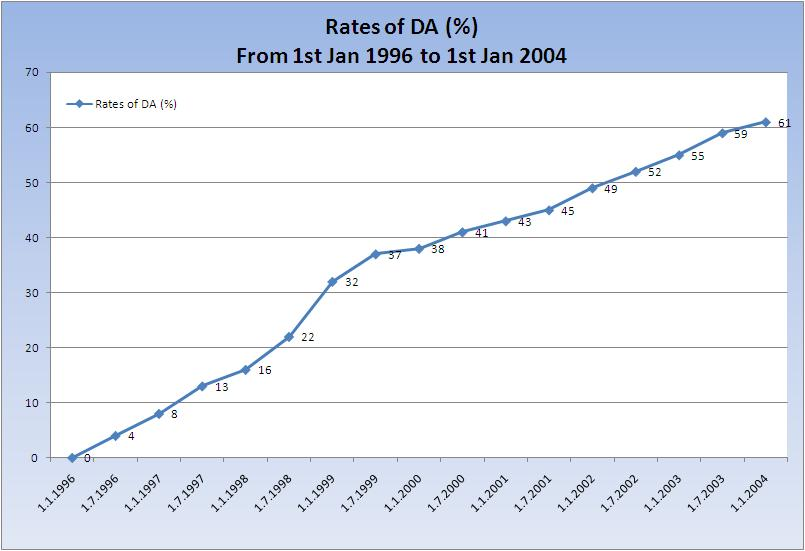
Dearness Allowance is paid to government employees to offset the impact of inflation. It is calculated using the Consumer Price Index for Industrial Workers (CPI-IW), published monthly by the Labour Bureau under the Ministry of Labour and Employment.
The index tracks price changes in essential items including food, housing, transport and fuel.
After the pandemic, inflation increased significantly, leading to steady DA revisions. The allowance rose from about 17% in 2020 to close to 60% by early 2026.
DA and the Pay Commission connection
The DA figure matters because the government typically absorbs accumulated DA into basic salary when a new Pay Commission begins.
This means:
- DA becomes part of the new salary base
- Allowances increase automatically
- Pension benefits rise permanently
Economists refer to this process as inflation neutralisation.
Former finance secretary Subhash Chandra Garg has noted in public policy discussions that:
“Pay commissions protect the real income of government employees. The intent is to adjust salaries in line with inflation over a long period.”
How Salaries May Change
The key mechanism is the fitment factor, a multiplier applied to current basic pay.
Historical fitment factors
| Pay Commission | Fitment Factor |
|---|---|
| 5th | ~1.6 |
| 6th | 1.86 |
| 7th | 2.57 |
| Expected 8th | ~1.7–2.2 (analyst estimates) |
Public finance economist Madan Sabnavis, Chief Economist at Bank of Baroda, said:
“The DA level determines how large the base salary becomes. When inflation has accumulated over ten years, the revision appears large, but it essentially compensates for lost purchasing power.”
Example projections
| Current Basic Pay | Possible Revised Pay |
|---|---|
| ₹18,000 | ₹30,000–₹40,000 |
| ₹25,500 | ₹43,000–₹55,000 |
| ₹35,400 | ₹60,000+ |
These figures are indicative because the final fitment factor will be decided after recommendations and Cabinet approval.
Why the Increase Feels Large
Employees often interpret Pay Commission revisions as a sudden pay jump. In reality, the increase represents inflation accumulated over a decade.
During the 2016 revision, salaries rose sharply on paper. However, economists noted that inflation between 2006 and 2016 had significantly eroded purchasing power.
A labour economist at the Institute for Human Development (IHD) said:
“The Pay Commission is not a windfall. It is a correction. Without periodic revision, real wages would decline every year due to inflation.”
Impact on Pensions and Retirement Benefits
The Pay Commission affects retirees as much as current employees.
Pensions are calculated from the last drawn basic salary. When the base salary increases:
- Pension rises
- Gratuity ceiling increases
- Family pension also rises
A pension policy researcher at the National Institute of Public Finance and Policy (NIPFP) noted:
“The long-term fiscal effect of a Pay Commission is mainly pensions, not salaries, because pension payments continue for decades.”
Effects on Allowances
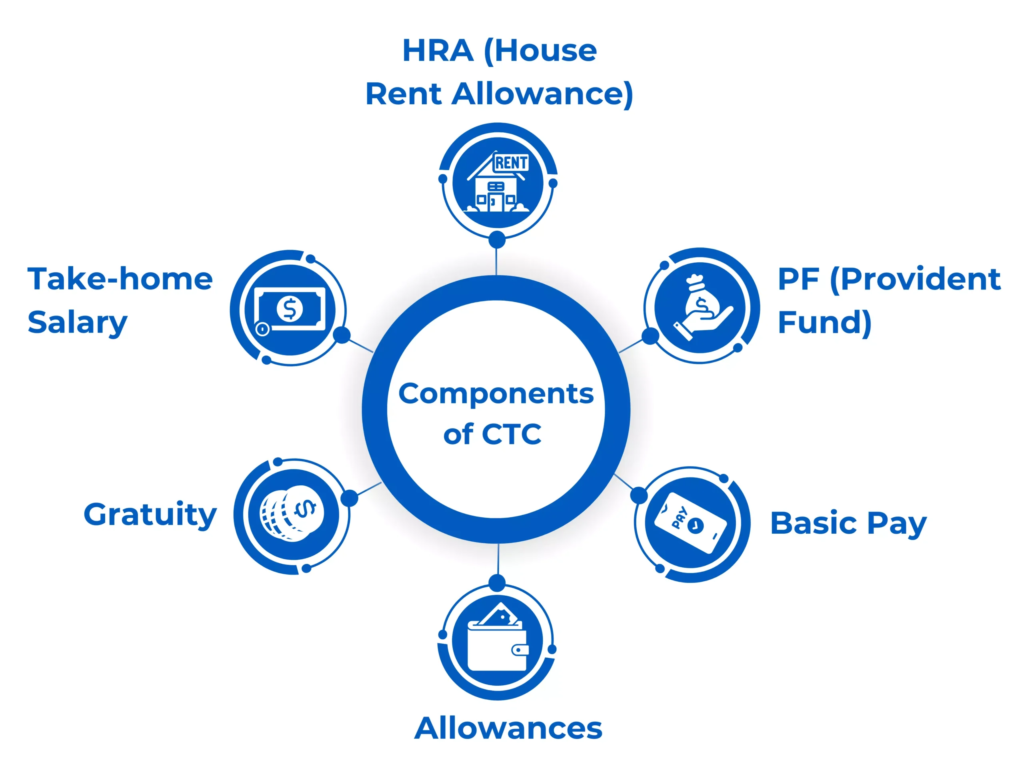
Many benefits are tied directly to basic pay:
- House Rent Allowance (HRA)
- Travel Allowance (TA)
- Leave encashment
- Gratuity
When basic salary rises, these automatically increase.
For urban employees, HRA may become a major component of total earnings because it is calculated as a percentage of basic pay depending on city classification.
Impact on State Governments
The Pay Commission applies only to central government employees, but its impact rarely stops there.
Historically, state governments revise their salary structures soon afterward.
This creates pressure on state finances because states employ more workers than the central government.
State finance departments closely watch central decisions. A senior state finance official said:
“Once the Centre revises pay, employee unions in states immediately demand parity. States cannot easily ignore that demand.”
Fiscal Implications for Government
The government must balance employee welfare with fiscal discipline.
The 7th Pay Commission significantly increased expenditure. Parliamentary discussions and Finance Ministry estimates indicated that government spending rose sharply during the initial implementation years.
Public finance expert D.K. Srivastava of EY India said:
“Pay revisions stimulate consumption but also expand pension liabilities. The government must ensure sustainability over the long term.”
Higher salaries may also increase:
- Fiscal deficit
- Borrowing requirements
- Interest payments
Wider Economic Effects
Pay Commission revisions have historically influenced the broader economy.
Positive effects
- Higher consumer spending
- Housing demand
- Automobile purchases
- Retail growth
Risks
- Inflationary pressure
- Wage inflation in private sector
- Fiscal strain on states
Economists say rural consumption may particularly benefit because many pensioners live outside major cities.
Timeline: What Happens Next
The process typically follows four stages:
- Government announces commission
- Commission gathers data and recommendations
- Cabinet approval
- Implementation (often retrospective)
If delayed, employees receive arrears payments covering the period between recommendation and implementation.
Why the Issue Matters Beyond Government Employees
The Pay Commission affects more than government staff.
Private sector negotiations in public-linked industries — banking, insurance, and transport — often follow government revisions.
In addition, higher pensions increase household spending in smaller towns. Economists consider this an indirect economic stimulus.
Conclusion
The approaching 60% Dearness Allowance threshold signals a structural turning point in India’s public sector compensation system. The 8th Pay Commission is expected to convert accumulated inflation adjustments into a revised salary framework that will influence wages, pensions and allowances for the next decade.
While employees anticipate significant increases, policymakers must balance fiscal responsibility with wage protection. The final recommendations will shape government finances and consumer demand across India well beyond the public sector.