

Artificial intelligence is rapidly transforming offices, factories, and services worldwide, but experts say some careers remain resistant to automation. The debate around 6 High-Paying Jobs AI Can Never Replace focuses on professions requiring empathy, accountability, and real-time judgment. While machines can analyze data faster than humans, certain roles still depend on trust, responsibility, and human connection.
6 High-Paying Jobs AI Can Never Replace
| Key Fact | Detail |
|---|---|
| AI excels at | Pattern recognition, prediction, automation of routine tasks |
| AI struggles with | Empathy, moral judgment, accountability, persuasion |
| Safest careers | Roles involving human trust and real-world responsibility |
Artificial intelligence will continue advancing and influence nearly every profession. However, research and historical patterns suggest human-centered roles remain essential. As workplaces evolve, technology will likely act as a partner rather than a replacement. Careers built on responsibility, empathy, and creativity — the 6 High-Paying Jobs AI Can Never Replace — are expected to remain central to modern economies.
The Growing Debate Over AI and Employment
Artificial intelligence is already reshaping how work is performed. Automated systems now write reports, analyze medical images, and assist software development. Businesses use predictive tools to forecast sales and customer behavior. Governments use AI for fraud detection and administrative tasks.
Yet labor economists increasingly argue that automation changes tasks, not entire occupations.
Throughout history, new technologies have created similar concerns. During the Industrial Revolution, machines replaced many manual labor jobs but also created new industries, including manufacturing management and engineering. Later, computers reduced clerical paperwork but generated careers in IT, cybersecurity, and digital design.
Today’s shift is different in speed but similar in pattern. The central question is not whether AI will eliminate work entirely, but which human capabilities remain indispensable.
Researchers consistently identify four capabilities machines struggle to replicate:
- ethical responsibility
- emotional understanding
- physical adaptability
- social persuasion
These form the foundation of the 6 High-Paying Jobs AI Can Never Replace.
Why Some Careers Resist Automation
Artificial intelligence relies on historical data and probability models. It predicts likely outcomes but does not truly understand human experience.
Human decision-making, by contrast, includes context, values, and unpredictable circumstances. A doctor deciding whether to operate, a lawyer reading a jury’s reaction, or a leader resolving workplace conflict must evaluate incomplete information in real time.
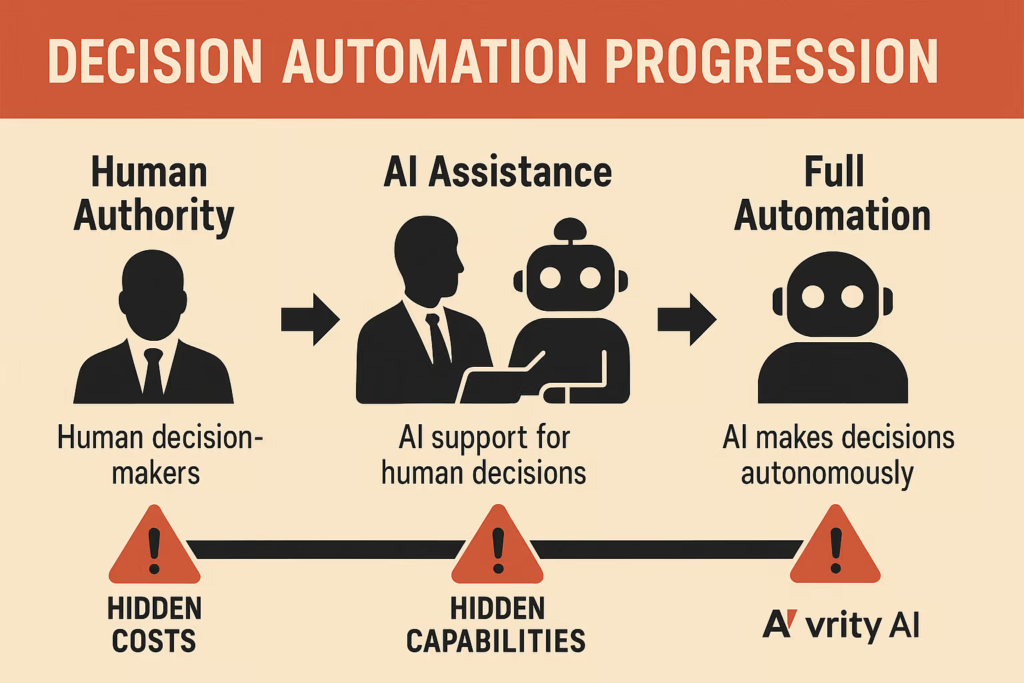
AI can recommend. Humans must decide.
1. Surgeons and Specialized Physicians (healthcare careers)
Modern hospitals already use AI tools to assist diagnosis. Systems can detect tumors in medical scans and identify disease patterns earlier than before. However, the final decision still rests with physicians.
Surgery requires rapid reactions when complications occur. A patient’s condition may change in seconds. Machines cannot yet improvise safely in unpredictable biological situations.
Equally important is communication. Doctors explain risks to patients and families, help them understand outcomes, and provide reassurance before treatment. Medical care is partly technical and partly emotional.
Healthcare administrators emphasize accountability as a major barrier to automation. Patients trust a licensed professional who can be held responsible for decisions. An algorithm cannot provide consent discussions, emotional reassurance, or legal responsibility.
2. Psychologists and Therapists (mental health professionals)
Mental health care relies heavily on interpersonal understanding. Therapists interpret tone of voice, body language, and emotional hesitation — signals often more important than spoken words.
AI chat systems can simulate conversation but cannot form genuine relationships. Therapy works because patients feel heard by another human being who understands their experiences.
Psychologists also manage crises. They must recognize risk of harm, respond ethically, and adapt advice based on individual personalities and cultural background.
In many cases, improvement comes not from information but from human connection. That element remains beyond current artificial intelligence.
3. Corporate Executives and Organizational Leaders
Leadership involves more than data analysis. Executives motivate employees, negotiate agreements, and resolve conflicts between departments or partners.
A business strategy often requires taking risks without complete information. Human leaders weigh financial outcomes alongside morale, reputation, and social impact.
Another crucial factor is accountability. Companies require individuals to assume legal and moral responsibility for decisions affecting employees, investors, and customers. Regulations worldwide require identifiable leadership, not automated authority.
AI may support leaders, but organizations still require humans to make final decisions and represent the company publicly.

4. Lawyers and Courtroom Advocates (legal professions)
Legal systems depend on interpretation and persuasion. Courtroom outcomes often hinge on credibility and narrative rather than pure logic.
AI tools already help review contracts and search legal records. However, litigation requires responding to opposing arguments, questioning witnesses, and adapting to judges’ reactions.
Juries assess emotion, intent, and sincerity. These are social judgments that cannot be reduced to mathematical probability.
Legal responsibility also prevents automation. Courts hold attorneys accountable for ethics violations and professional conduct. An automated system cannot fulfill those obligations.
5. Skilled Trades: Electricians, Plumbers, and Mechanics
Automation works best in predictable settings. Skilled trades operate in unpredictable physical environments.
A mechanic diagnosing an engine fault listens for sound variations. An electrician interprets wiring conditions inside aging buildings. A plumber adjusts solutions based on water pressure, structure design, and weather.
These tasks require improvisation. Every home or building presents unique challenges.
Robots perform repetitive factory assembly well, but they struggle in narrow spaces, uneven conditions, and changing environments. As infrastructure ages in many countries, demand for skilled technicians is expected to remain strong.
6. Creative Directors, Filmmakers, and Brand Strategists
Artificial intelligence can generate images, music, and written content. However, creativity involves cultural understanding, symbolism, and emotion.
Creative professionals design campaigns that influence human behavior. They interpret trends, humor, and social meaning — aspects dependent on shared experience.
Audiences respond to authenticity. They connect to stories reflecting human perspectives, not only technical patterns. For this reason, human direction remains central even when AI assists production.
Human Skills the Future Workforce Needs
The discussion around 6 High-Paying Jobs AI Can Never Replace also highlights skills becoming more valuable across industries.
Education specialists increasingly emphasize:
- communication
- teamwork
- adaptability
- ethical reasoning
- critical thinking
Technical knowledge alone may not be sufficient. Workers who combine technical competence with interpersonal ability are expected to have the greatest job security.
How AI Will Change — Not End — Work
Rather than replacing workers entirely, AI is more likely to become a tool. Doctors use diagnostic systems, lawyers use research software, and leaders use predictive analytics.
This pattern is sometimes called “augmentation,” meaning machines enhance human productivity rather than eliminate it.
For example:
- Radiologists may review AI-flagged images faster
- Lawyers may analyze documents more efficiently
- Engineers may design products with simulation assistance
The role shifts from performing repetitive tasks to supervising, interpreting, and making final judgments.
Social and Economic Implications
Workforce transitions may still be difficult. Some administrative roles may decline as automation improves. Workers may need retraining to move into human-centered careers.
Education systems are gradually adapting. Schools and universities increasingly teach collaboration, project-based learning, and communication skills alongside technical subjects.
Policy experts argue lifelong learning will become essential as technologies evolve.
FAQ
Will AI eliminate most jobs?
No. Most analysts expect job transformation, not disappearance. Many roles will change duties rather than vanish completely.
Which jobs are most vulnerable?
Routine office tasks, repetitive digital work, and predictable manufacturing roles face the highest automation risk.
Why are trust-based jobs safer?
These jobs require human relationships and accountability, which machines cannot legally or socially provide.