
India’s urban landscape is changing faster than policies can keep up. Over the last decade, people have moved to cities in huge numbers, businesses have expanded beyond metros, and digital services have connected even small towns to the national economy. Yet basic civic services still feel unreliable in many places. This is where the 16th Finance Commission becomes important. The 16th Finance Commission is not just about government budgeting it may directly influence whether your neighborhood gets better roads, improved drainage, cleaner streets, and reliable water supply in the coming years. Most people never notice how city governments are funded, but the system behind them explains why potholes stay for months or drains overflow every monsoon. Municipal corporations are responsible for everyday services, yet they operate with limited financial independence. The recommendations of the upcoming fiscal panel are expected to change that by strengthening local governance and connecting money to performance. In simple terms, the 16th Finance Commission could quietly reshape urban life across India.

The concept of 16th Finance Commission urban governance has become a central topic in policy discussions because it shifts attention from just dividing taxes to improving how cities actually function. The Commission is expected to recommend performance-linked funding for municipalities. Cities may need to show audited accounts, improved property tax collection, digital financial records, and measurable service delivery improvements. Instead of receiving funds automatically, they may earn them by functioning efficiently. This approach encourages transparency, better planning, and long-term accountability. If implemented properly, the 16th Finance Commission urban governance framework could push municipal bodies to operate like accountable public institutions rather than dependent administrative departments.
16th Finance Commission
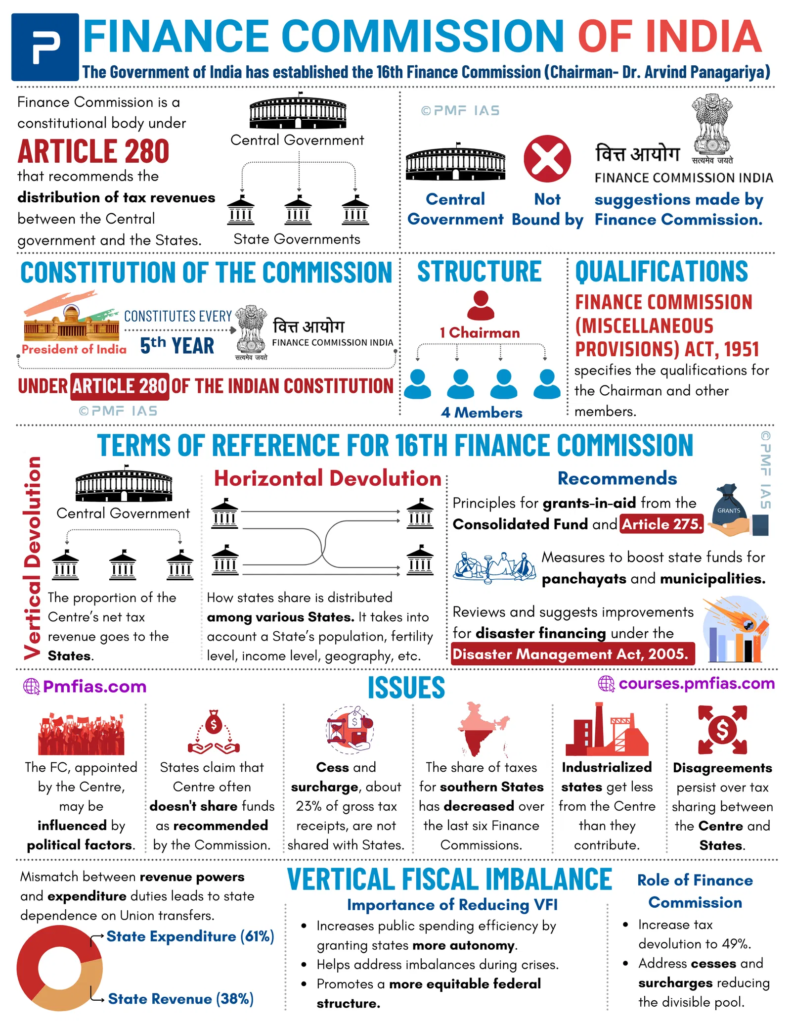
| Category & Aspect | Details |
|---|---|
| Implementation Period & Coverage | April 2026 to March 2031 |
| Core Responsibility & Role | Recommends sharing of central tax revenue between Union, states, and local bodies |
| Major New Focus & Priority | Strengthening finances of urban local bodies |
| Key Reform Areas & Objectives | Property tax reform, transparent accounting, service delivery standards |
| Type Of Grants & Transfers | Performance-linked municipal grants |
| Main Problem Addressed & Concern | Weak financial capacity of municipalities |
| Expected Outcome & Impact | Better infrastructure, improved accountability, efficient governance |
| Long-Term National Goal & Vision | Cities as engines of economic growth |
India has launched several urban initiatives over the years. Yet infrastructure programs alone cannot solve governance challenges. The real issue has always been the mismatch between responsibility and financial authority. The 16th Finance Commission addresses this structural gap. By linking funding with accountability and encouraging financial independence for cities, it aims to create capable local governments. If implemented successfully, the reform may not make headlines immediately. Instead, it will gradually produce cleaner streets, safer neighborhoods, and more efficient services. The biggest transformation will be institutional: cities functioning as true governments rather than dependent administrative units.
Why Cities Suddenly Matter in Fiscal Policy
- India’s development model has shifted. For decades, rural welfare dominated planning, but today economic activity is increasingly concentrated in cities. Urban areas produce a major share of employment, innovation, and investment. Logistics hubs, IT parks, manufacturing clusters, and service industries all depend on functioning urban infrastructure.
- However, city governments often lack financial strength. Municipal bodies manage waste collection, public health, street lighting, drainage, and roads, yet they control only a small portion of public spending. The 16th Finance Commission recognizes this imbalance.
- Poor infrastructure affects economic productivity. Congested traffic increases fuel consumption. Flooded streets disrupt supply chains. Inadequate sewage systems harm public health. By strengthening municipal finances, the 16th Finance Commission may directly influence economic growth and urban quality of life.
From Grants to Incentives
Previous Finance Commissions used formula-based funding. Cities received grants based on population or area. While predictable, this system did not reward performance. The 16th Finance Commission may introduce incentive-based transfers. Municipalities that improve governance could receive higher funding. Performance criteria may include:
- Digital financial reporting
- Regular audits
- Transparent budgeting
- Waste management efficiency
- Water supply coverage
This reform changes administrative behavior. When financial support depends on results, local governments prioritize service delivery. Over time, citizens benefit from improved civic infrastructure without constant intervention from higher authorities.
The Property Tax Question
- Property tax is considered the most reliable local revenue source worldwide. In India, however, it remains underused. Many cities still maintain outdated records and manual assessment systems. As a result, municipalities depend heavily on state transfers.
- The 16th Finance Commission is expected to encourage modernization of property taxation. Cities may adopt GIS-based mapping, updated property valuations, and digital payment systems.
- Why this matters is simple. When a city generates its own revenue, it can act faster. Road repairs, water pipeline maintenance, and drainage upgrades no longer depend entirely on state approvals. Financial autonomy strengthens local governance and improves daily life for residents.
Metropolitan Governance: The Missing Layer
Large urban regions rarely function under a single authority. A metropolitan area may involve multiple municipal corporations, planning agencies, and transport authorities. Often these bodies work independently, creating overlapping projects and delays. The 16th Finance Commission may support stronger metropolitan planning institutions. Coordinated governance can integrate:
- Public transport systems
- Land use planning
- Housing expansion
- Environmental management
Better coordination reduces duplication of projects and improves efficiency. Residents may notice fewer contradictory construction works and more consistent infrastructure development.
Linking Funds To Service Delivery
A major change proposed under the 16th Finance Commission is linking funding to measurable outcomes. Instead of simply accounting for spending, municipalities may need to show improvements in services.
Cities could be evaluated on:
- Sewage treatment capacity
- Solid waste processing
- Drinking water availability
- Road maintenance
- Flood management systems
This model focuses on citizen experience. Rather than measuring paperwork, it measures results. Municipal administrations are incentivized to solve real problems, not just complete formal procedures.
Climate Resilience Enters Urban Finance
Urban areas increasingly face climate risks. Flooding during monsoons, extreme heat waves, and water shortages are becoming common in several Indian cities. The 16th Finance Commission may include climate resilience as part of funding guidelines. Cities investing in preventive infrastructure could receive additional support. Possible focus areas include:
- Stormwater drainage upgrades
- Urban green spaces
- Heat mitigation measures
- Sustainable public transport
Preventive planning reduces disaster recovery costs. Climate-ready cities are economically stronger and safer for residents.
Challenges That Could Slow The Reform
Despite its potential benefits, implementation will not be easy.
- State Government Control: Municipal bodies operate under state governments, and some states may hesitate to grant greater financial independence.
- Administrative Capacity: Many municipalities lack trained financial officers and urban planners capable of managing modern systems.
- Political Resistance: Increasing property tax efficiency is often unpopular even when it improves services.
- Data Reliability: Performance-based funding requires accurate reporting systems, which several cities still need to develop.
These challenges mean reforms will take time, but gradual improvements are still expected.
Why This Commission Could Be Different
- India is entering a phase where growth depends on urban efficiency. Housing supply, labor mobility, logistics networks, and industrial clusters all rely on functioning cities.
- The 16th Finance Commission acknowledges that municipal governance is not a minor administrative issue but an economic priority. By empowering local bodies financially, the Commission could create accountable urban governments capable of long-term planning.
What Citizens May Actually Notice
Residents may not follow fiscal policy discussions, but they will notice the outcomes. Over a few years, the reforms could translate into everyday improvements:
- Faster road repairs
- Reliable waste collection
- Improved drainage during monsoon
- Digital property and civic services
- Better coordinated public transport
These practical changes directly affect quality of life more than most large national schemes.
Read More:-
SEBI Equity Fund Categories 2026 Rules Decoded: How the New Categories Could Impact Your Returns
FAQs
1. What is the main role of the 16th Finance Commission?
It recommends how central tax revenue should be shared between the Union government, states, and local bodies for the 2026–2031 fiscal period.
2. How will it affect municipal corporations?
Municipalities may receive performance-based grants, encouraging better accounting, improved services, and financial independence.
3. Will citizens pay higher taxes?
The goal is not necessarily higher taxes but better property tax administration and improved collection efficiency.
4. When will changes begin?
The new financial framework is expected to start from April 2026 after the Commission submits and the government adopts its recommendations.